

Kaiser Reef Defines 3,100oz A1 Tailings Resource to Add Higher-Grade Feed at Maldon

Updated: Sep 18
The company has identified 77,427 tonnes of historical A1 tailings grading 1.25g/t gold, creating another potential feed source for its existing Porcupine Flat processing operation as the company continues extracting value from its Victorian asset base.

Kaiser Reef Limited (ASX: KAU) has defined an Inferred Mineral Resource of 77,427 tonnes at 1.25g/t gold for 3,124 ounces within historical tailings at its A1 Gold Mine in Victoria.
Consequently, the company is now progressing plans to reclaim the material and process it through the Porcupine Flat Processing Plant at Maldon.
Table 1: Kaiser Reef Tailing Summary

The estimate follows a 28-hole air-core drilling program completed earlier this year and adds a potentially higher-grade source of feed to Kaiser's existing Victorian processing strategy.
Kaiser is already reclaiming, trucking and processing lower-grade Union Hill stockpile material through Porcupine Flat. The company says that material is expected to support processing at approximately 10,000 tonnes per month until 2030, while the newly defined A1 tailings could provide supplementary higher-grade feed.

Metallurgical testwork conducted by Kaiser has returned an estimated gold recovery of 83.6% for the A1 tailings through the Porcupine Flat processing route.
The announcement does not materially change Kaiser's overall resource base, but it adds another piece to a broader strategy emerging across its Victorian operations: identify stranded or historical material, use infrastructure already under company control and generate additional processing options without first having to build a new standalone operation.
Key Highlights
|
A Small Resource With an Existing Destination
The important part of the A1 announcement is arguably not the 3,124 ounces.
It is where Kaiser intends to send them.
The company already owns and operates the 200ktpa CIL Porcupine Flat Processing Plant at Maldon, removing one of the larger capital hurdles that would normally sit between a small historical stockpile and potential gold production.
Kaiser says the A1 material will be reclaimed using open-pit techniques before being trucked to Porcupine Flat for processing.
This makes the economic question around A1 quite different from that of a standalone 3,100-ounce development.
The company does not need to justify building a processing facility around the tailings. Instead, it needs to determine whether the cost of reclaiming, transporting and treating the material through existing infrastructure can produce an acceptable margin.
Managing Director Brad Valiukas said the company was progressing plans for execution, noting that current testing indicated gold recoveries above 80%.
He also positioned A1 as part of the work underway across Kaiser's Victorian portfolio following the decision to place the underground mine on care and maintenance last year.
That distinction is important.
A1 underground mining is not being restarted as part of this announcement. Kaiser is instead identifying residual value within historical processed material already sitting at the site.

Figure 1: A1 Tailings Estimate with Topography (Source: KAU announcement)
Why the Grade Matters
Kaiser currently has another historical material stream feeding Porcupine Flat.
The Union Hill stockpile at Maldon contains an estimated 570,000 tonnes at 0.48g/t gold for approximately 8,600 ounces.

The A1 tailings are considerably smaller in tonnage but carry a reported grade of 1.25g/t gold.
Kaiser specifically describes the A1 material as a potential higher-grade complement to the current Maldon processing feed rather than as a replacement for it.
That creates the possibility of feed blending becoming part of the value proposition.
The announcement does not provide an operating cost, trucking cost, processing schedule or expected production contribution from A1, so it is too early to calculate what the tailings may contribute financially.
What the company has established is the physical inventory, an Inferred resource classification and an indicative metallurgical recovery through the plant it intends to use.
The economics are the next step.
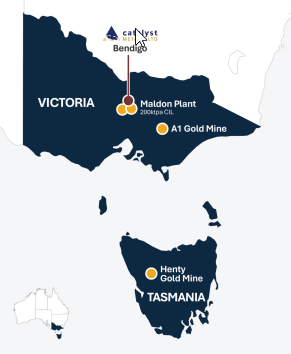
Figure 2: Location of KAU Operations (Source: KAU Website)
What the Drilling Established
Kaiser drilled 28 air-core holes for a total of 284 metres into the historical tailings material during 2026.
The holes were drilled vertically, with samples collected at one-metre intervals and assayed for gold at the Gekko laboratory in Ballarat.
The drilling produced a wide range of composite grades.
Among the reported holes were 7 metres at 6.40g/t gold in A1AC_018, 4 metres at 9.57g/t in A1AC_019 and 12 metres at 2.90g/t in A1AC_020, alongside a number of longer intervals grading closer to the overall estimate.
“This is a good result, and with gold again recently touching A$200 per gram, it makes sense to reclaim this historical material, adding to the processing options at our Maldon Gold Project and cleaning up the A1 site.
However, these results should not be interpreted in the same manner as conventional drilling into an in-situ orebody.
Kaiser explicitly notes that the material consists of tailings generated from historical processing operations and that no geological continuity is expected within the stockpile. Grade continuity is also subject to a high degree of uncertainty.
That is one reason the entire estimate has been classified as Inferred.
The Important Qualifications
There are several technical points worth keeping in perspective.
The A1 estimate is the first Mineral Resource reported for this tailings material, and Kaiser has used a zero-gram-per-tonne cut-off because the stockpile is treated as globally mineralised material rather than a conventional continuous orebody.
No direct density measurements have yet been completed on the tailings.
Kaiser instead adopted a density of 1.6 tonnes per cubic metre, based on industry benchmarking for unconsolidated tailings material.
These assumptions are not unusual for an early-stage Inferred tailings estimate, but they do matter when considering the precision of the reported tonnage.
The resource should therefore be viewed as an estimate supporting the next stage of evaluation rather than as a fixed production inventory.
“Our Maldon Gold Project, including the Porcupine Flat Processing Plant and Union Hill
Underground Mine, is a fully permitted operation in the heart of Victoria’s Golden Triangle. We are currently reclaiming, trucking and processing low-grade stockpile material, and pouring gold.
The addition of some higher-grade material from A1 will be a bonus, and we continue to advance permitting to enable the reclaiming of surface material at Nuggetty .”
More Than One Feed Source Emerging at Maldon
The A1 announcement also fits within a broader pattern at Kaiser's Victorian operations.
The company is already processing the Union Hill stockpile and pouring gold at Maldon. It is simultaneously advancing underground development at Union Hill and continuing permitting work aimed at gaining access to additional surface material at Nuggetty.
A week before the A1 announcement, Kaiser reported that the first new underground development cut had been taken at Union Hill in almost eight years, establishing the Northern Drill Drive from which the company intends to test underexplored extensions of several historic reef systems.

These are different opportunities.
Union Hill underground development is primarily about exploration and potential future resource growth.
The A1 tailings are about recovering value from material already mined and processed historically.
The Union Hill stockpile provides the current processing feed.
Together, they demonstrate how Kaiser is attempting to use the Porcupine Flat plant as the centre of a broader Victorian gold strategy rather than treating Maldon as a single-mine proposition.
The Financial Context
Kaiser enters this work from a stronger financial position than many junior companies attempting to restart historical gold operations.
During the June quarter, Kaiser produced 6,000 ounces of gold, comprising 5,563 ounces from Henty and 437 ounces from Maldon, while closing the period with approximately A$37.2 million in cash and bullion.
The company also reaffirmed combined Henty and Maldon production guidance of 32,000 ounces for the coming financial year.
That context matters because Kaiser is not relying on the A1 tailings to establish itself as a gold producer.
A1 instead represents an incremental opportunity within a business that already has producing assets, processing infrastructure and cash available for investment.
That potentially gives Kaiser the flexibility to assess relatively modest opportunities that may not make sense as standalone developments but could become useful when connected to existing infrastructure.
What Investors Should Watch
There are now three practical questions around the A1 tailings.
The first is permitting and execution. Kaiser says plans to reclaim the stockpile are being progressed, but no timetable for commencement has yet been provided.
The second is economics. Investors will need to see the cost of reclaiming and transporting the material from A1 to Maldon and the resulting processing margin.
The third is actual recovery and reconciliation once processing begins.
The current resource contains 3,124 ounces of gold, but contained metal is not the same as recovered production. The company's resource work applies an estimated metallurgical recovery of 83.6%, and actual plant performance will ultimately determine what proportion of that gold becomes saleable metal.
Those numbers will determine whether A1 becomes a useful processing supplement or simply a technically interesting historical stockpile.
Samso Concluding Comments
The 3,100 ounces of gold contained in the A1 tailings are not, by themselves, going to transform Kaiser Reef. That is probably the wrong way to look at this announcement.
What interests me is what Kaiser is doing with the assets it already owns.
A1 was placed on care and maintenance last year, but that has not stopped the company from looking for value around the operation. Kaiser has now drilled the old tailings, defined an Inferred resource and identified a processing route through infrastructure it already controls.
That changes the equation.
A small standalone resource can struggle to carry the capital required for mining infrastructure and a processing plant. Kaiser does not have that particular problem here. The Porcupine Flat plant is operating, Union Hill material is already being trucked and treated, and the A1 tailings potentially provide another feed source at a higher grade.
There are still questions that need answering.
The resource is Inferred. Density has been assumed rather than measured. Historical tailings do not have the geological continuity of an in-situ orebody. Most importantly, we do not yet have the complete economics of reclaiming the material and trucking it to Maldon.
So I would not focus too heavily on the contained-ounce number.
The more interesting question is what margin Kaiser can generate from those ounces using infrastructure it already owns.
Kaiser is processing the Union Hill stockpile, developing underground access at Maldon, working towards additional surface material from Nuggetty and now potentially adding A1 tailings to the feed mix.
None of those individual pieces necessarily needs to be company-changing.
The value may come from how the pieces fit together.
For investors, the next numbers worth watching are therefore not another estimate of contained gold. They are the recovery, processing cost and margin Kaiser can achieve when A1 material actually reaches Porcupine Flat.
About Kaiser Reef Limited
Kaiser Reef Limited (ASX: KAU) is an Australian gold producer operating the Henty Gold Mine in Tasmania and advancing its Victorian gold operations centred on the Maldon Gold Project.
Henty is an established underground operation supported by a 199koz gold Ore Reserve and a processing plant with capacity above 300ktpa.
Maldon includes a fully permitted and operating 200ktpa CIL processing facility, existing underground infrastructure and the Union Hill Gold Mine. The Maldon goldfield has historically produced approximately 1.75Moz at 28g/t gold.
Cover photo: Gold bullion bars, Stevebidmead. CC0, via Wikimedia Commons (https://commons.wikimedia.org/wiki/File:Gold_bullion_bars.jpg)

The Samso Way – Seek the Research
Here at Samso, we pride ourselves on delivering content for investors that is independent and informed by over three decades of experience in the industry. Our content is well-researched and is only created if I see merit in discussing the company's story.
Our mission is simple: cut through the noise and spotlight what matters—genuine stories, grounded insights, and real opportunity.
Our content is well-researched and is only created if the team sees merit in discussing the company or concept. Investors can explore our three core platforms:
There may be numerous paths to success in investing, but the common thread among successful individuals is that they remain committed to making informed decisions. Equip yourself with the right knowledge and tools, and you will be well on your way to achieving your financial goals.
Most importantly, investors need to be absolutely diligent in understanding their own risk-reward tolerance and capabilities. Never bite off more than you can chew. As they say, Rome wasn’t built in a day, and the Great Wall stood because it took centuries to complete.
The Samso Philosophy:
Stay curious. Stay sharp. And remember—digging deeper always uncovers the real value.
In Life, there is no such thing as a Free Lunch.
Never bite off more than you can chew is my parting comment.
Happy Investing, and the only four-letter word you need to know is DYOR.
To support our independent work, please head over to our Support Page and give us a helping hand in any of the ways listed. This is a new initiative for the Samso Platform, and it was always the concept of Samso when we started this journey in 2018.
Disclaimer
The information or opinions provided herein do not constitute investment advice, an offer, or solicitation to subscribe for, purchase, or sell the investment product(s) mentioned herein. It does not take into consideration, nor have any regard to your specific investment objectives, financial situation, risk profile, tax position and particular, or unique needs and constraints.
Samso is a trusted platform that equips dedicated investors with up-to-date industry knowledge and insights from top CEOs and thought leaders. By staying informed on business advancements and market trends, investors can enhance their financial decisions through a combination of expert guidance and their own research.

Samso News | www.samso.com.au | An Investor Lens on ASX-Listed Companies

Comments