


Argentina - A Changing Republic For Mineral Resources Investments?

Updated: Sep 17
Argentina has long been one of those jurisdictions that sits in the investor’s peripheral vision, not being ignored, but was never fully committed to as a "safe or aprropriate jurisdiction. For close to three decades, the global mining industry has watched the country with a mix of interest and hesitation.
The reason is not difficult to understand. Argentina hosts ground that would be considered first-order by most geologists, sitting within the Andean Copper Belt and the Lithium Triangle, yet the level of production has consistently lagged the geological potential (Figure 1).

Figure 1: Summary of mineral deposits in Argentina. (source: Canning House)
That gap has historically had little to do with what sits below surface. It has been shaped by what happens above it. Currency controls, shifting royalty structures, and an often fragmented alignment between federal and provincial governments have made long-term planning difficult. For mining companies — particularly those accountable to public markets — uncertainty in policy translates directly into uncertainty in capital allocation. When the rules are not stable, modelling long-term returns becomes an exercise in risk management rather than project development.
The election of Javier Milei in December 2023 marks a shift in that narrative. The policy direction has moved decisively toward attracting investment, with early signs that structural reform is being implemented rather than simply discussed. For an industry that operates on multi-decade timelines, that change in direction is meaningful, but it does not remove the need for careful observation.

Figure 2: President Javier Milei during his election win in 2023. (source: El Orden Mundial)
This Samso Insight takes a step back from the noise and lays out the moving parts. The political environment is evolving, new regulatory incentives are being introduced, and the resource base remains as compelling as it has always been. At the same time, the structural risks that have defined Argentina over the past three decades have not disappeared.
The intention here is not to form a view on whether Argentina deserves investor capital. It is to provide a clear, factual map of the jurisdiction as it stands today — particularly in the context of ASX-listed companies already operating in the country or considering entry. In markets like Argentina, understanding the balance between opportunity and execution risk is what ultimately shapes outcomes.
Contents
1.1 Javier Milei and the Reform Agenda
The election of Javier Milei was not a routine political transition. It marked a clear break from Argentina’s recent economic history. Milei came into office positioning himself as a libertarian economist, with a mandate built around fiscal contraction, deregulation, and a deliberate unwinding of what he described as an overextended state.

Figure 3: Javier Milei elected as President of Argentina with an inflation rate of over 200% in 2023. (source: Google)
He inherited an economy under significant strain. Inflation had moved beyond 200% annually — a level that removes any real visibility for long-term planning. For the mining sector, that type of macro environment makes it difficult to commit capital, regardless of geological quality. Milei’s initial response was direct. Public spending was cut, subsidies were reduced, and the reliance on monetary financing of the deficit was effectively stopped.
The adjustment phase was not without consequence. Through 2024, the social impact was visible, with poverty levels rising as the economy reset. By late 2025, however, the macro indicators began to stabilise. Inflation moderated from peak levels of around 211% to closer to 30% by year-end, with further declines projected if fiscal discipline is maintained (Figure 4). At the same time, GDP, which had contracted through 2023 and 2024, showed signs of recovery, with growth forecasts approaching 5% for 2025.

Figure 4: Javier Milei as President has lowered the inflation rate to 5% but underlying the dramatic inflation miracle, is the underlying tone of a rise in unemployment, poverty and growing discontent. Is this a real economic turn-around or will it just prove to be another false dawn for Argentina and also are there any lessons for the UK economy? (source: OECD)
The October 2025 midterm elections became an important checkpoint. Milei’s party, La Libertad Avanza, performed better than expected, strengthening his legislative position. While he does not hold a full congressional majority, the outcome provides enough support to defend key policies and continue pushing reform. For investors, this matters. It suggests that, at least in the near term, the policy direction is not being reversed.
1.2 Federal Structure and Provincial Dynamics
Argentina’s federal system is one of the more important factors in understanding how its mining sector actually functions. While national policy sets the broader direction, the practical side of mining, such as titles, permits, and environmental approvals, sits with the provinces (Figure 5).

Figure 5: An important distinction of how regulations in the mining industry sector works in Argentina is that the Provincial authorities control the important component s of a mining project, the titles, permits, and environmental approvals (source: Google)
Each province operates with a degree of independence. There is no single permitting framework across the country. Provinces such as San Juan and Salta (Figure 6)have built a reputation as pro-mining jurisdictions, with established pathways for project development. Others, including Mendoza and Chubut, have taken a more restrictive approach, particularly around open-pit mining and certain processing methods.

Figure 6: View of a mine in San Juan and the Salta lithium Solars, Argentina. (source: Google)
What this creates is variation. A supportive national policy environment does not guarantee smooth execution at the project level. The interaction between federal incentives — such as RIGI — and provincial control over approvals becomes a key part of the operating landscape. For companies on the ground, this is not theoretical. It directly influences timelines, capital requirements, and ultimately project viability.
1.3 Political Continuity — What to Watch
From an investment perspective, the question is not whether policy has changed — it clearly has. The more relevant question is how long that change will hold.
The 2025 midterm result provides some short-term confidence. Milei’s improved position in Congress (Figure 7) reduces the immediate risk of key legislation being unwound, particularly the RIGI framework that underpins much of the current investment narrative. It gives the government enough support to maintain direction, even without full control of the legislature.

Figure 7: The seats in the Chamber of Deputies in the Argentine National Congress.
The longer-term view is less certain. The 2027 presidential election will be a more definitive test of policy durability. Argentina has a history of policy resets when administrations change, and that remains part of the risk profile.
What is worth noting is how global capital is responding. Major mining companies such as BHP, Rio Tinto, and Glencore have committed significant capital to Argentine projects under the current framework. These are long-cycle investments, typically measured in decades rather than years. Their participation suggests that, at a minimum, the current direction is being taken seriously.

Figure 8: Rio Tinto's $2.5B Rincon Lithium Project is one of the long-cycle investments in Argentina. Do we follow the leader?
For ASX investors, this becomes the balance to understand. The policy environment is improving, capital is moving in, and the geology has always been there. The variable that remains is continuity — and in jurisdictions like Argentina, that is often the factor that determines whether potential translates into outcome.
2.0 The RIGI - Argentina's investment Incentive Regime
Like all jurisdiction, the opportunities in mining will be driven by what the investment arena perceives the risk - reward structure of the location. Argentina is not a new regime and it is definitely not thought of as a cowboy nation. Over my 30 years in the industry, Argentina has always been in the conversation, however, I have never looked into the details. The region has always been the playground of the North American mining fraternity and the bold Australians.
When I came up with this topic for a Samso insight, I thought this will be a great reason to dig deeper into the ins and outs of doing a mining business in Argentina.
2.1 What RIGI Is
The Regime for the Incentivisation of Large Investments — commonly referred to as RIGI — is the central policy mechanism introduced under Javier Milei to reposition Argentina as a destination for large-scale capital.
Approved by Congress in July 2024 and implemented in October of the same year, RIGI is designed with a clear objective. It is aimed at attracting long-term investment into capital-intensive sectors such as forestry, tourism, infrastructure, mining, technology, steel, energy, and the oil and gas sector.
The framework applies to projects with a minimum capital commitment of US$200 million. What distinguishes RIGI is not a single incentive, but the combination of measures that attempt to remove the historical friction points that have defined Argentina’s investment narrative.
At its core, the regime offers a reduction in corporate tax from 35% to 25%, alongside a phased reduction in dividend taxes after seven years of operation. More importantly, it introduces a 30-year stability framework covering tax and foreign exchange conditions. For investors used to policy volatility, this is the element that carries the most weight.
Additional provisions include exemptions on import tariffs for capital equipment and key inputs, the ability to access export revenues in foreign currency, and access to international arbitration mechanisms rather than relying solely on domestic courts. Individually, these are not unique in a global context. In combination, they represent an attempt to align Argentina with jurisdictions that compete for the same pool of mining capital.
Southern Pulse has a LinkedIn post that gives a good summary of what RIGI is all about.

The biggest concern for observers is that the political lifespan since 2011 has been one term and there has been a history of false promises and a change in political agendas. According to El Pais, a prominent Spanish newspaper, all is not well with the Javier Milei government.
According to El Pais, public sentiment in Argentina is showing that all is not well with the Javier Milei administration a combination of concerns for the economy and the political scene. The most commonly cited issues are corruption (43.3%), unemployment (42.2%), inflation (35.3%), the weakening of democracy (31.4%), and the broader economic situation (29.6%).
Recent polling across the country shows a mixed but consistent trend in support for Javier Milei. Some surveys indicate approval levels around 40%, while others point to disapproval closer to 50%. According to the paper, local Isasi-Burdman polling firm reports that the President approval ratings has declined to 46%, however, the President current standing remains stronger than that of previous presidents at a similar stage in their terms.
Other data suggests a more cautious outlook. Synopsis Consultores reports a disapproval rating of 56% and approval at 35%. El Pais reports that the decline in support since December 2025 is likely to be linked to ongoing economic pressures, including wages falling behind inflation, weak consumption recovery, and continued job losses.
2.2 Why the Forex Provision Matters
For mining companies, the ability to generate revenue is only part of the equation. The ability to move that revenue is equally important.
Under previous administrations, companies operating in Argentina could export commodities and generate foreign earnings, but often faced restrictions when attempting to repatriate those funds. The result was a structural imbalance. Capital was effectively trapped within a depreciating currency environment, reducing real returns to shareholders.
RIGI directly addresses this issue. Projects that qualify under the regime are given progressively greater access to foreign currency, with restrictions easing over time and materially improving after the initial years of operation. From an investor perspective, this is one of the more practical changes within the framework. It shifts Argentina from being a jurisdiction where value could be created but not easily realised, to one where capital mobility is at least partially restored.
2.3 Early Uptake
The early response to RIGI provides some indication of how the market is interpreting the policy shift.
By late 2025, around 20 projects had applied for inclusion under the regime, representing an estimated US$30 billion in potential investment. The majority of these applications sit within the mining sector, with copper projects alone accounting for approximately US$16 billion of that pipeline.
One of the more visible early approvals has been the expansion of Rio Tinto’s Rincón lithium project in Salta Province, a development valued at US$2.7 billion. This is not a small-scale commitment. It reflects a long-term view on both the resource and the policy environment.
Government projections suggest that, if the current pipeline progresses, mining investment could reach approximately US$22 billion between 2026 and 2029. Whether that figure is realised will depend on execution, but the direction of capital flow is becoming clearer.
2.4 Limitations and Criticisms
While RIGI has been positioned as a pro-investment framework, it has not been without opposition.
One of the more consistent criticisms has come from Argentina’s domestic manufacturing sector. The exemption of import tariffs on capital equipment allows project developers to source machinery and inputs internationally without additional cost. Local producers argue that this creates an uneven playing field, where domestic suppliers are disadvantaged relative to imported alternatives.
These concerns are not purely economic. They carry political weight. Industrial stakeholders have argued that the regime may undermine local production capacity by favouring external supply chains for major projects.
For investors, this introduces a secondary consideration. Policy frameworks do not exist in isolation. Where there is domestic resistance, there is always the potential for political response over time. RIGI addresses many of the historical barriers to investment, but it also introduces new dynamics that will need to be monitored as the policy environment evolves.
In practical terms, RIGI represents a structured attempt to reduce sovereign risk in Argentina’s mining sector. It does not remove that risk entirely. What it does is change the balance — and for capital-intensive industries, that shift is often enough to move projects from the sidelines into active consideration.
3.0 Australian Companies In Argentina
To give some context to the activities of ASX companies in Argentina as of April 2026, I did a "comprehensive" search of ASX-listed companies with active operations, projects or joint venture interests in Argentina. To add some form of an attempt for structure, I have tried to sort the list by commodity followed by the stage the projects are at, as of April 2026. I will add that I have not entirely verified the details so please DYOR and don't take my list as gospel. I hope at best, it would help your search, assuming you wanted to do that :-)
The list of companies qualify for the list where Argentina represents a material part of their current or planned operations. JV structures and partner relationships are noted where relevant.

In a recent paper by the Ministerio de Economica Republica Argentina, I found some great information in regards to the status of projects (Figure 9). This isa good highlight of the existing mineral resource projects in country.

Figure 9: Status of mineral resource projects in Argentina. (source: Ministerio de Economica Republica Argentina)
The upcoming section is split up in commodities to help structure the Samso Insight, so the list of ASX compnaies will be within the sections.
3.1 Copper
Copper is arguably the most well known commodity that aligns itself with investors in this region. Chile is the most well know of what I call the tiology of copper porphry deposits in South America. The other nations are Peru and Argentina. (Figure 10 )

Figure 10: Copper projects in Argentina. (source: Ministerio de Economica Republica Argentina)
As far as I know, Chile is the world's leading copper producer, accounting for roughly 30% of annual global production. It also holds the largest copper reserves worldwide, estimated at over 200 million tonnes.
In terms of giant deposits, I would say that Northern Chile is home to some of the world's largest, most prolific porphyry deposits, including Escondida (the world's largest), Chuquicamata, and El Teniente. Around 80% of Chilean copper production comes from porphyry copper-gold deposits.
Geologically, Chile's northern regions are part of a massive Andean metallogenic belt that contains multiple parallel, porphyry-rich belts formed between the Cretaceous and Pliocene eras. The paper that I found while researching for this Samso Insight by Osvaldo Rabbia is a good run down on the endowment of the region and the need to discover more copper to fee the green energy transition.
Table 1: Companies in Argentina that are working on copper projects.

As for Argentina, it is regarded as an emerging, top-tier global destination for porphyry copper deposits, sharing the same highly fertile Andean geological belt as Chile and Peru (Figure 9). It boasts massive, world-class assets, notably the Vicuña district and Josemaría, with significant potential for further discoveries in less-explored areas. Table 1 above covers some of the companies that are in copper and its obvious that the main player will be BHP. Belararox are still in the exploration territory.
The Vicuña district (filo del sol, Josemaría) is among the largest copper-gold-silver deposits globally (Figure 11). Other key projects include Agua Rica, Altar, and the mature Bajo de la Alumbrera. From an exploration perspective, compared to northern Chile, Argentina is less explored, providing higher potential for new discoveries within the same productive belt.

Figure 11: Location of the Josemaría porphyry copper-gold deposit in the late Oligocene-Miocene volcanic belt of northern Chile and contiguous Argentina, showing the age assignment of the main porphyry and epithermal deposits. Insets show the location of the flat-slab portion of the subducted Nazca plate (contours from Cahill and Isacks, 1992) and position of Figure 1a in South America. b. More detailed geology of the Josemaría area and vicinity. Volcanic rocks compiled mainly from Maksaev et al. (1984), Mpodozis et al. (1995), Fauqué (2001), Panteleyev and Cravero (2001), Zappettini et al. (2001, 2008), SERNAGEOMIN (2003), Sanguinetti (2006), Martínez et al. (2015a), Mpodozis et al. (2018), and C. Mpodozis (writ. commun., 2018). The age of older volcanic rocks west of the Los Helados fault is uncertain, but between Paleocene and Oligocene. Deposit age assignments based on Sillitoe et al. (1991, 2013, 2016), Kay et al. (1994), Mpodozis et al. (1995), Bissig et al. (2001), Mpodozis and Kay (2003), Perelló et al. (2012), Maydagán et al. (2014), Cáceres (2015), Y. Kapusta inRode et al. (2015), Yoshie et al. (2015), Holley et al. (2016), Astorga et al. (2017), and NGEx Resources Inc. (unpub. data). Background shaded-relief image from Esri (2014 version). (source: Richard H. Sillitoe, Fionnuala A.M. Devine, Martin I. Sanguinetti, Richard M. Friedman; Geology of the Josemaría Porphyry Copper-Gold Deposit, Argentina: Formation, Exhumation, and Burial in Two Million Years. Economic Geology 2019;; 114 (3): 407–426. doi: https://doi.org/10.5382/econgeo.4645)
The region, particularly the Frontal Cordillera in San Juan, hosts numerous porphyry centres with copper, gold, and molybdenum. While Chile currently leads significantly in production, the central Andes-Argentina arc segment is one of the most fertile porphyry belts globally. As we have discussed, the upside for Argentina is that it's mining sector has seen substantial growth, with mining exports in 2025 reaching record highs.
What is interesting is that Argentina’s porphyries often feature significant gold and silver content alongside copper. Here are some samples where this gold-silver-copper associations are observed.
1. Filo del Sol (San Juan)
Significance: Known as one of the largest copper-gold-silver deposits currently under development (Figure 11).
Gold/Silver Content: The project hosts a massive high-grade "by-product" resource of over 4.6 million ounces of gold and nearly 160 million ounces of silver.
Latest Resource: As of May 2025, it reported 32 million ounces of measured and indicated (M&I) gold and 659 million ounces of M&I silver, alongside 13 million tonnes of copper. (source: Australian Resources and Investments)
2. Josemaria (San Juan)
Significance: A major porphyry copper-gold deposit that was 100% owned by Lundin Mining before a 50% acquisition by BHP in early 2025 (Figure 11).
Gold/Silver Content: The project features a Feasibility Study highlighting a major porphyry Cu-Au system.
Resource Data: Part of the Vicuña district along with Filo del Sol, which holds a total of 13 million tons of copper, 32 million ounces of M&I gold, and 659 million ounces of M&I silver. (source: Australian Resources and Investments)
3. Taca Taca (Salta)

Figure 12: The location of the Taca Taca Deposit in Argentina. (source: First Quantum)
Significance: First Quantum's flagship project in Argentina, a massive, high-quality porphyry copper-gold-molybdenum deposit (Figure 12).
Gold/Silver Content: The 2025 technical report outlines a proven and probable mineral reserve containing 8,429 kt of copper and over 5.5 million ounces of gold.
Production Focus: It is expected to produce significant quantities of gold and silver alongside copper over a 35-year mine life. (source: First Quantum)
4. Agua Rica (Catamarca)
Significance: A major porphyry Cu-Mo-Au deposit located in the Farallon Negro region, close to the previous Alumbrera mine.
Characteristics: Known for complex porphyry copper centres (Quebrada Seca-Trampeadero and Melcho) which are heavily enriched with gold. (source: PorterGeo)
5. Altar (San Juan)
Significance: A significant porphyry copper-molybdenum-gold deposit (Figure 11).
Gold/Silver Content: While sometimes lower in gold compared to Chilean counterparts, it still contains a notable porphyry Cu-Au system, with gold often associated with early stockwork veining and late-stage veins. (source: [26])
6. Los Azules (San Juan)
Significance: A large-scale porphyry copper deposit located in the San Juan province, known as one of the top undeveloped copper projects (Figure 11).
Characteristics: Features significant gold and silver credits in addition to copper. (source: Wikipedia)
3.2 Gold
Gold is Argentina's dominant mining export, accounting for approximately 68% of total mineral export earnings in 2024 at US$3.14 billion. In the gold sector, Argentina reports 138.4 million ounces in resources and 33.6 million ounces in reserves, with active operations including Cerro Vanguardia, Cerro Negro, Veladero, Lindero and Don Nicolás (Figure 13).

Figure 13: Gold projects as presented by the Ministerio de Economica Republica Argentina. (source: Ministerio de Economica Republica Argentina)
THE OPERATING MINES
Cerro Negro — Newmont Corporation | Santa Cruz Province
Cerro Negro is Argentina's highest-profile gold operation and one of the world's highest-grade underground gold mines. Operated by Newmont (NYSE: NEM) in Santa Cruz Province within the Deseado Massif (Figure 13). The mine has three high-grade underground operating mines, Eureka, Mariana Central and Mariana Norte and two underground deposits, Emilia and San Marcos, which is currently being developed.
The company expects higher production in 2026 driven by increased throughput from ongoing productivity initiatives, with five other deposits in late-stage evaluation for development to expand existing operations. Cerro Negro produced 278,000 ounces of gold in 2025. In February 2026, Newmont committed approximately US$800 million to extend the life of Cerro Negro beyond 2035 under the Cerro Negro Expansion 1 (CNE1) project, funded by a record US$7.3 billion in 2025 free cash flow.
Both Newmont and the government of Santa Cruz Province described the initiative as "strategic," noting it will require US$800 million over six years, with the infrastructure programme key to maintaining production levels and extending operations beyond 2035.
Veladero — Barrick Mining / Shandong Gold (50/50 JV) | San Juan Province
Veladero has been in operation since 2005 and is Argentina's largest gold exporter by volume (Figure 13). In its 20th year of production, Veladero produced 503,000 ounces of gold in 2024 and has proposed an expansion initiative targeting an additional 1.6 million ounces of gold, with a capital expenditure of approximately US$400 million deployed between 2025 and 2028, submitted under the RIGI framework.
The project is projected to add US$3.8 billion in export revenue through 2033. The Veladero mine currently employs 3,800 people, with 91% of the workforce from the local San Juan province. Located at elevations of 4,000 to 4,850 metres above sea level, approximately 374 kilometres northwest of San Juan city, Veladero is operated by a 50/50 joint venture between Barrick and Shandong Gold.
Cerro Vanguardia — AngloGold Ashanti (92.5%) | Santa Cruz Province
Cerro Vanguardia, in which AngloGold Ashanti holds a 92.5% stake with Argentine state company Fomicruz holding the remaining 7.5%, is a gold-silver operation with multiple small open pits and multiple narrow-vein underground mines that has been operated since 1998 (Figure 13).
In the third quarter of 2025, Cerro Vanguardia produced 43,000 ounces of gold at a total cash cost of US$1,139 per ounce, with year-to-date production to September 2025 of 137,000 ounces at US$1,253 per ounce — a 6% increase year-on-year driven by higher recovered grades and an increase in ore tonnes treated. The mine is a long-life Deseado Massif epithermal operation with multiple pit and underground sources contributing to production.
Lindero — Fortuna Mining Corp (100%) | Salta Province
Fortuna acquired the fully permitted, shovel-ready Lindero development project in July 2016 and made a positive construction decision in September 2017 (Figure 13). Mass earthmoving began in 2018, with first gold pour in October 2020.
The Lindero deposit is a gold-rich porphyry system hosted within diorite to monzonite porphyritic stocks. Fortuna's 2026 guidance for Lindero is 92,000 to 102,000 ounces of gold at an AISC of US$1,520 to US$1,655 per ounce. In Q1 2026 Fortuna commenced a 7,000-metre exploration programme at the Cerro Lindo gold prospect, 70 kilometres from the Lindero mine in Salta Province, as part of the company's brownfield exploration programme. Lindero was the first operating metallic mine in Salta Province.
Don Nicolás — Cerrado Gold | Santa Cruz Province
Cerrado Gold owns the Minera Don Nicolás mine (MDN), located in Santa Cruz Province, Argentina (Figure 13). The Minera Don Nicolás mine is a producing high-grade gold mine with significant expansion and exploration potential. Cerrado Gold reported Q1 2026 production results from MDN in April 2026. Don Nicolás is a smaller-scale Deseado Massif epithermal operation contributing to Argentina's gold production profile alongside the larger mines.
IN CONSTRUCTION
Calcatreu — Patagonia Gold (TSXV: PGDC) | Río Negro Province
Calcatreu represents the newest addition to Argentina's gold production roster. Upon receipt of all provincial permits in Q4 2024, construction commenced in Q1 2025, with mining activities beginning in August 2025 and the first blast in September 2025. Leaching operations commenced at Calcatreu on March 31, 2026, with over 91,300 tonnes of ore amassed, 73,300 tonnes crushed and 18,800 tonnes stacked on the leach pad. The Calcatreu deposit is a low-sulphidation epithermal gold and silver system with indicated mineral resources of 690,000 ounces of gold and inferred resources of 343,000 ounces. Patagonia Gold secured a US$40 million investment in 2025, with the investor receiving a 40% interest in the project, allowing the company to accelerate development while maintaining operational control.
IN DEVELOPMENT — ADVANCED
Gualcamayo — Minas Argentinas / Aisa Group | San Juan Province
Gualcamayo's ambitious development plan includes the construction of a new mine (Carbonatos Profundos), a pressure oxidation plant and a 50MW solar park. The company predicts annual output of 120,000 ounces of gold from 2029, with an estimated 17-year lifespan and potential exports worth US$400 million per year. The mine possesses 3 million ounces of economically viable gold reserves, a fraction of the 5 million ounces of certified resources discovered on just 3% of a 40,000-hectare property. In August 2025, Gualcamayo was pursuing a US$665 million redevelopment under RIGI, and in December 2025 the RIGI committee approved the project — the tenth approval under the scheme.
Table 2: ASX compnaies with Gold projects in Argentina.

As you can see, Argentina's gold sector in 2026 is is attracting new capital commitments indicating a genuine confidence in the jurisdiction's long-term direction. Here are three signs that gives me the confidence to say that things in the gold sector may be leading the pact in new capital.
First, Newmont's US$800 million Cerro Negro expansion commitment — announced in February 2026 and backed by Argentina's Economy Minister, so that will represent that the world's largest gold company choosing to extend a flagship Argentine operation through to at least 2035.
Second, the Barrick/Shandong Gold RIGI application for US$400 million at Veladero demonstrates that a 20-year-old mine with maturing reserves can still attract major life extension capital under the right regulatory framework.
Third, Calcatreu's progression from construction permit to first leaching in under 18 months illustrates that permitting and execution timelines in Argentina can, under the right provincial and federal conditions, be internationally competitive.
For ASX companies operating in Argentina's gold space such as Challenger Gold Limited (ASX: CEL), Austral Gold Limited (ASX: AGD), NewPeak Metals Limited (ASX: NPM) and Pursuit Minerals Limited (ASX: PUR), are not pioneers but this is not saying that working in Argentina will be a walk in the park. The sector's credibility may be underwritten by the operating track record of the mines above, but discovering and having a handle of expenditure will be challenging.
The presence of the global majors do provide a jurisdiction backdrop that reduces the perceived risk premium for smaller operators in the same country, but raising money is a problem for small companies and Argentina is a long way from Australia. It should not be forgotten that the global majors operating in Argentina did not just occur. There has been decades of passage and the global names have changed over time as well.
3.3 Lithium
For anyone that was invested in the Lithium bull run a couple of years ago, you would be very familiar with Argentina being the land of Solars. Hence it is not surprising that one would find that Lithium is Argentina's fastest-growing mining export and its most structurally significant commodity for the decade ahead.
In the first eight months of 2025, lithium exports totalled US$494 million, representing year-on-year growth of 32% in value and 56% in volume, making lithium the country's second most-exported mineral at 14% of total mining exports.
Argentina, the world's fifth-largest lithium producer, expected to produce 130,800 tonnes of lithium carbonate equivalent in 2025 and that is a 75% increase from 2024 which is primarily driven by new operations in Salta and expansions in Catamarca and Jujuy (Figure 14).

Figure 14: Lithium projects as presented by the Ministerio de Economica Republica Argentina. (source: Ministerio de Economica Republica Argentina)
Over the past decade, mining companies have invested over US$7.6 billion to bring production capacity to 183,700 tonnes of LCE (Lithium Carbonate Equivalent). Private-sector estimates suggest launching 17 of the 30 registered new projects would require an additional US$12.8 billion in investment, enough to raise Argentina's productive capacity to 580,000 tonnes of LCE and if eight additional planned processing plants come online alongside the seven already in operation, Argentina could become the world's single largest lithium producer.
That is the macro framing. What follows is a factual account of where the sector's major projects stand as at April 2026. An important terminology that some readers need to understand in the lithium industry is DLE Technology:
Direct Lithium Extraction (DLE) is a set of technologies designed to extract lithium directly from brine sources—such as underground solar brines, geothermal brines, or oilfield wastewater—without relying on the traditional, slow method of solar evaporation ponds. DLE acts like a "smarter filter," using chemical or physical processes to capture lithium ions while leaving behind other components, which allows for significantly faster, more efficient, and more sustainable production.
Hence, I thought I post this here so that it is easier to get through the details below. The DLE technology is something that was talked about in the past but is now pretty much mainstream conversation among the lithium "Want To Be Producers".
THE OPERATING PROJECTS
(as of April 2026)
Cauchari-Olaroz — Lithium Argentina / Ganfeng Lithium | Jujuy Province
Cauchari-Olaroz is Argentina's largest single lithium operation, located in the Olaroz-Cauchari salar system in Jujuy Province at altitude. Lithium Argentina holds a 44.8% interest in the operation through its equity stake in Minera Exar, with Ganfeng Lithium holding the majority of the balance and the Jujuy provincial government holding 8.5% through JEMSE.
Full-year 2025 production totalled approximately 34,100 tonnes of lithium carbonate, achieving the high end of annual guidance of 30,000 to 35,000 tonnes. Record quarterly production of approximately 9,700 tonnes was achieved in Q4 2025, with an average operating rate of 97% of nameplate capacity. Cash operating costs are expected to be below US$6,000 per tonne for Q4 2025, reflecting continued operational optimisation. 2026 production guidance has been set at 35,000 to 40,000 tonnes.
In December 2025, Cauchari-Olaroz submitted environmental permit and RIGI applications for a Stage 2 expansion of 45,000 tpa of additional lithium carbonate production capacity. A 5,000 tpa DLE demonstration plant continues engineering in China, with installation in Argentina targeted for 2026. The PPG regional project — consolidating Ganfeng's Pozuelos-Pastos Grandes with Lithium Argentina's Pastos Grandes and Sal de la Puna interests — targets up to 150,000 tpa of LCE across three phases, with a scoping study reporting an after-tax NPV of US$8.1 billion and an IRR of 33% at US$18,000 per tonne of lithium carbonate.
Fénix (Salar del Hombre Muerto) — Rio Tinto (via Arcadium) | Catamarca Province
The Fénix project, owned by Livent before being acquired through Arcadium, currently has a production capacity of 20,000 metric tonnes of lithium carbonate in situ and another 9,000 metric tonnes of lithium chloride from an external plant in the town of Güemes in Salta. Fénix is one of Argentina's two longest-operating lithium plants and has provided the technical foundation for further development at Hombre Muerto. Rio Tinto's overall lithium business reported 57,000 tonnes of LCE production in 2025, of which 46,000 tonnes were directly attributable to the company, reflecting the completion of the Arcadium Lithium acquisition in March 2025. The Fénix 1B expansion, with capacity for 10,000 tonnes per year of LCE, has completed construction and is advancing through commissioning, currently 60% complete, with delivery scheduled for the second half of 2026 backed by US$700 million in committed investment.
Olaroz — Rio Tinto / Toyota Tsusho / JEMSE | Jujuy Province
The Olaroz brine operation produces 43,000 mt per year of LCE. In Jujuy, the Olaroz lithium operation runs as a joint venture between Rio Tinto (66.5%), Toyota Tsusho (25%) and the Jujuy provincial government through JEMSE (8.5%). Olaroz has been in operation since 2015 and represents the model by which Argentina's brine extraction industry has been validated at scale over a decade of continuous operation. The project produces battery-grade lithium carbonate through conventional solar evaporation and remains one of the lower-cost operations in the global lithium supply chain.
Centenario-Ratones — Eramet / Tsingshan | Salta Province
The Centenario-Ratones deposit is one of the most attractive salars in Argentina, with drainable mineral resources of more than 15 million tonnes of LCE at an average concentration of 407 mg/L of lithium, supporting further capacity expansion. At full capacity, the Centenario Phase 1 plant will produce 24,000 tpa of battery-grade lithium carbonate equivalent. The project is owned by Eramet (50.1%) and Zhejiang Tsingshan (49.9%). The inauguration of Centenario-Ratones as the fourth lithium production plant in Argentina and the first in Salta Province marked a significant milestone, with the Argentine Chamber of Mining Companies noting that production potential had tripled from 37,500 tonnes of LCE in 2022 to 136,500 tonnes. Centenario-Ratones also holds the distinction of being Argentina's first DLE-based commercial lithium operation.
Mariana — Ganfeng Lithium (100%) | Salta Province
Mariana is a lithium-potassium salt lake project located in the Salar de Llullaillaco in Salta Province, operated by Ganfeng's 100% owned subsidiary Litio Minera Argentina. Total lithium resources reach approximately 8.12 million tonnes of LCE. The project carries an investment of around US$600 million to produce 20,000 tonnes of lithium chloride — or approximately 17,300 tonnes of LCE — per year. Ganfeng inaugurated the Mariana lithium project during Q1 2025, with initial cash flow from the project anticipated thereafter. Mariana is a wholly Chinese-owned lithium operation, representing the first independently operated Chinese lithium project in Argentina's Lithium Triangle.
Tres Quebradas (3Q) — Zijin Mining | Catamarca Province
Zijin Mining's Tres Quebradas lithium project in Catamarca holds 8.54 million tonnes of LCE resources. Phase 1 construction enabling 20,000 tonnes of LCE production capacity was completed, with the project targeting progression towards Phase 2. Once fully developed, the project has the capacity to produce 40,000 to 60,000 tonnes of LCE per year. Zijin Mining began operations at Tres Quebradas in Catamarca Province, targeting production of 20,000 tonnes of LCE. The Tres Quebradas deposit is characterised by an average lithium concentration of 786 mg/L — one of the highest grades of any brine project in Argentina — and sits within a single contiguous resource that Zijin acquired from Neo Lithium Corp in 2022 for US$770 million.
IN DEVELOPMENT — ADVANCED
Rincón — Rio Tinto (100%) | Salta Province
Rio Tinto's Rincón project is the most discussed lithium development in Argentina in 2026, and for good reason. Rincón has completed its first commercial export — 200 tonnes of battery-grade lithium carbonate shipped from the Port of Buenos Aires to Shanghai in March 2026 — and is backed by US$2.5 billion in committed capital to expand to 60,000 tpa, supported by a US$1.175 billion project loan from IFC, IDB Invest, Export Finance Australia and JBIC. First production from the expanded facility is expected in 2028 over a 40-year mine life. Rincón and Galan Lithium's Hombre Muerto West are the only two lithium projects in Argentina to have received formal RIGI approval.
Sal de Vida — Rio Tinto (100%) | Catamarca Province
Sal de Vida is a lithium brines project located in the Eastern Subbasin of Salar del Hombre Muerto, Catamarca. Nominal annual LCE capacity is designed to reach 45,000 tonnes in two stages, with Stage 1 providing 15,000 tonnes of LCE from brine extracted from the East Wellfield. Construction of the first three pond complexes is complete and brine pumping for concentration has begun. Pre-commissioning and commissioning activities are expected by H1 2026, with first production expected in H2 2026. Sal de Vida has completed construction and is 40% through commissioning, with US$700 million in committed investment.
Hombre Muerto West (HMW) — Galan Lithium (ASX: GLN) | Catamarca Province
Galan Lithium's Hombre Muerto West project is discussed in detail in the ASX Company Profiles section of this Insight, but it merits inclusion here for context. Phase 1 construction is complete as at April 2026, with a 10,000 tonne LCE brine inventory accumulated in evaporation ponds and wet commissioning of the nanofiltration plant underway. First lithium chloride concentrate is targeted in H1 2026 with first shipment in H2 2026. HMW Phase 1 is among the near-term milestones in Catamarca that will advance the province's installed lithium capacity alongside Fénix 1B.
Pozuelos-Pastos Grandes (PPG) — Ganfeng (67%) / Lithium Argentina (33%) | Salta Province
PPG consolidates three adjacent projects — Ganfeng's Pozuelos-Pastos Grandes, Lithium Argentina's Pastos Grandes, and the jointly-held Sal de la Puna — into a single regional development programme. The consolidated PPG project hosts a 15.1 million tonne LCE measured and indicated resource. A comprehensive scoping study reports an after-tax NPV of US$8.1 billion and an IRR of 33% at US$18,000 per tonne. Initial capital cost for Stage 1 is estimated at US$1.1 billion. The development approach targets 150,000 tpa of LCE across three phases, utilising a hybrid DLE flowsheet. Environmental permit for Stage 1 has been secured from the Government of Salta following a 14-month review. RIGI applications for Cauchari Stage 2 and PPG are being prepared.
SAMSO THOGHTS
It appears that the lithium scene in Argentina has changed materially since the lithium bull run three years ago. The country has moved from two operating plants and a large pipeline to seven operating facilities spanning three provinces, with multiple projects at various stages of commissioning, development and feasibility.
The operator base has grown to a global deck of comapnies such as Rio Tinto, Ganfeng, Zijin, Eramet, Toyota Tsusho and Lithium Argentina represent capital from Australia, China, France, Japan, Canada and the United States. For investors looking at the Argentinian space, it seems that even with the global downturn for lithium projects, Argentina's Lithium Triangle is doing well and is now no longer just a regional story but a globally competed supply position.
Another change that my research is indicating is that DLE technology is becoming a commercial reality in Argentina rather than a theoretical alternative. Centenario-Ratones was the first commercial DLE operation in the country, Rio Tinto uses DLE at Rincón, and both Galan and Cauchari-Olaroz are advancing DLE demonstration or expansion pathways.
Argentina is also entering a new expansion phase in its lithium industry, with over 30 registered projects and a development timeline stretching to 2033. Industry leaders have drawn the analogy that "lithium is the next Vaca Muerta" — Argentina's prolific shale oil and gas province — suggesting patience and sustained capital are the ingredients required to unlock the full endowment. (Lithium Argentina)
Table 3: ASX companies in the Argentinian Lithium sector.

For the ASX companies that are listed in Table 3, it seems that the competition has indeed heated up. The real players are all taking sights and are locked on to take as many slices as they can from the Lithium space here in Argentina.
The small caps that were enjoying value creation during the lithium bull run will have to start getting their act together.
3.4 Silver
When I think of silver mining, I normally think of Mexico and the Andes. Hence, this Samso Insight is a good learning experience for me to start getting a better handle of the silver mining story since my recent Coffee with Samso with John Anderson and Investigator Silver Limited. Check out the Samso content below.
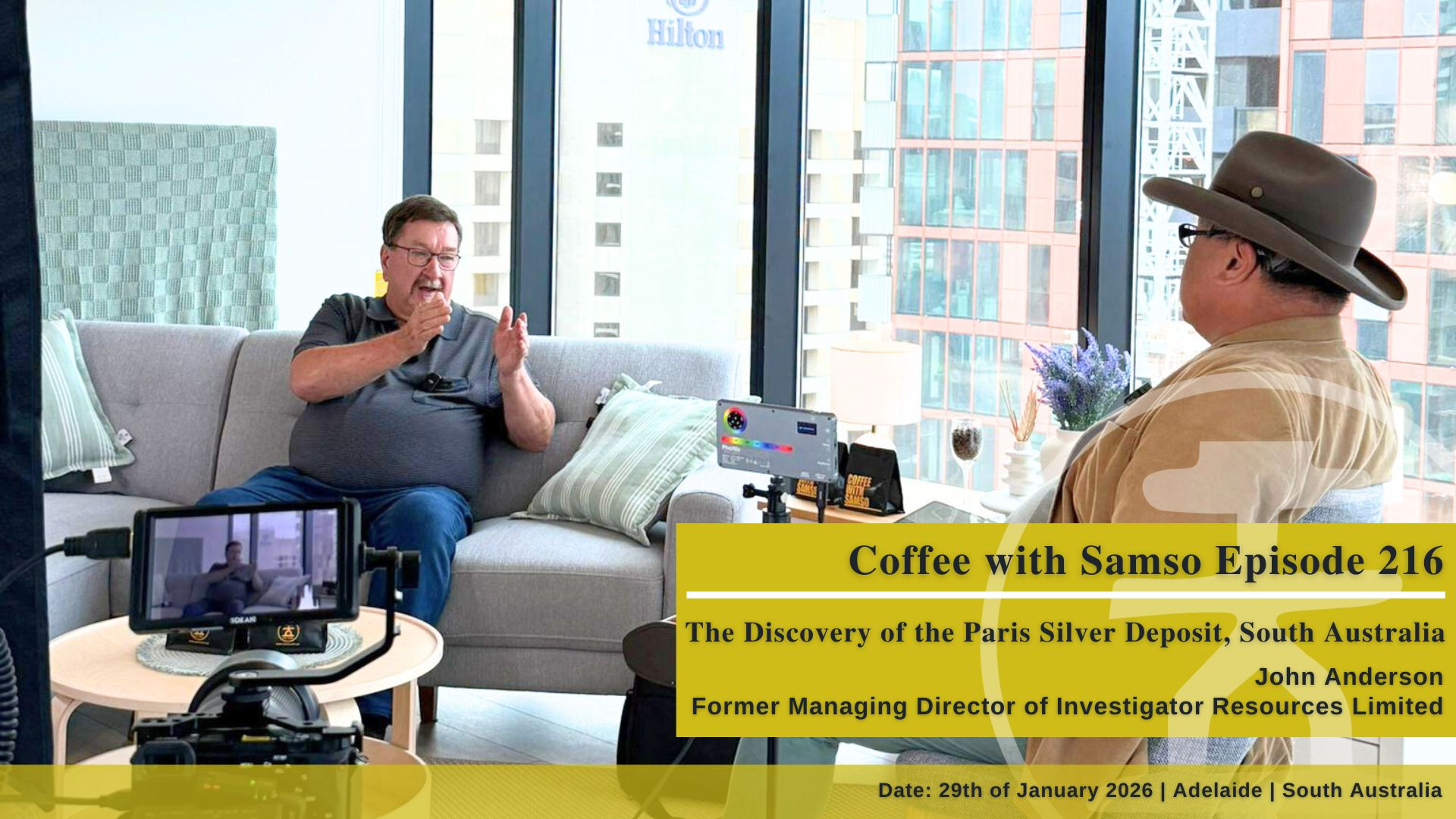
With the rising price of silver, it has pushed the thinking about silver further into the mainstream "punters" on the ASX. The recent pullback of precious metal pricing is a good thing, in my opinion. This should be the time for investors to take stock and start to think about what is actually a good project to back.

Did you know that Argentina is named after the Latin word for silver — argentum — and while the country's silver industry no longer carries the symbolic weight of colonial-era discovery, the Deseado Massif of Patagonia and the Puna Plateau of the northwest remain genuinely significant addresses in the global silver landscape (Figure 14).
Silver is produced both as a primary metal — from operations including San José (Hochschild Mining) in Santa Cruz and Puna Operations (SSR Mining) in Jujuy — and as a by-product from gold mining centres such as Cerro Vanguardia, Cerro Moro and Cerro Negro in Santa Cruz and Veladero in San Juan.

Figure 14: Silver projects as presented by the Ministerio de Economica Republica Argentina. (source: Ministerio de Economica Republica Argentina)
Argentina reports 3,839 million ounces of silver in total resources. The sector's near-term trajectory is upward — high silver prices in 2025, an active pipeline of near-production development projects, and a regulatory environment that has improved markedly under RIGI all point in the same direction.
THE OPERATING MINES
Cerro Moro — Pan American Silver (100%) | Santa Cruz Province
Cerro Moro is Argentina's most significant primary silver-gold underground operation in production as at 2026. Located in the Deseado Massif within Santa Cruz Province, the Cerro Moro operation consists of several open pit and underground mines, producing doré through a conventional leaching and Merrill-Crowe process.
In Q4 2025, Cerro Moro produced 27,600 ounces of gold and 0.92 million ounces of silver, representing year-on-year growth of 22.7% and 10.6% respectively. For 2026, Pan American Silver expects silver production from Cerro Moro to be 2.80 to 3.00 million ounces, indicating a 16% year-on-year increase at the mid-point, driven by mine sequencing into higher silver grade ores at the underground zones. Importantly, the project's mine life is being actively extended.
A 2025 drilling campaign at Cerro Moro executed 34,764 metres focused on converting inferred resources to higher confidence categories, delineating new zones and assuring operational continuity — including at the Bahía Laura sector, the Nini zone and Vein 4, all of which returned high-grade intercepts that will be incorporated in future resource updates. Santa Cruz Province's Ministry of Mining confirmed the results of that campaign as highly positive and cited the likely significant extension of the mine's operating life.
San José — Hochschild Mining (51% operator) / McEwen Mining (49%) | Santa Cruz Province
San José is one of Argentina's longest-operating silver-gold underground mines, having commenced production in 2007. The San José silver-gold mine is located in Santa Cruz Province, 1,750 kilometres south-southwest of Buenos Aires, operated by Hochschild Mining as the controlling 51% partner, with McEwen Mining holding the remaining 49%.
In 2025, McEwen Mining's attributable production from San José was 58,120 gold equivalent ounces, from 37,700 gold ounces and 1,776,000 silver ounces, using a gold-to-silver price ratio of 86:1 for the year. The mine operates multiple underground epithermal vein systems — Huevos Verdes, Frea and Kospi among them — within a 2,781 square kilometre property package, providing ongoing exploration optionality beyond the current active mining areas.
During H1 2025, San José delivered 4.4 million silver equivalent ounces. The operation recorded higher throughput tonnage compared to H1 2024, though this was partially offset by the mining of lower-grade border areas of the veins, reflecting the type of grade variability common in narrow-vein epithermal systems. San José has been one of the defining operations of the Deseado Massif and the technical template from which many subsequent Argentine silver-gold discoveries have been evaluated.
Puna Operations — SSR Mining (100%) | Jujuy Province
Puna Operations is Argentina's primary silver-lead-zinc operation, located at high altitude in Jujuy Province in the northwest of the country. The Puna Operations comprise the Chinchillas mine, which is a silver-lead-zinc open pit deposit that achieved commercial production in December 2018 and the Pirquitas processing facilities, which process ore transported 40 kilometres from Chinchillas and produce a silver-lead concentrate and a zinc concentrate shipped to international smelters. The Pirquitas facilities have been in commercial production since 2009.
SSR Mining's 2025 guidance for Puna was 8.00 to 8.75 million ounces of silver, with throughput targeted at approximately 5,000 tonnes per day. Exploration at the Cortaderas target was advancing ahead of an initial economic evaluation, alongside work to evaluate potential mineral reserve conversion at Chinchillas to extend the mine life. Puna is the only major silver operation in the Jujuy-Salta-Catamarca Puna plateau that is currently in production, and its continued operations provide important context for the feasibility of high-altitude Argentine silver production.
THE BLOCKED DEPOSIT
Navidad — Pan American Silver (100%) | Chubut Province
Navidad deserves inclusion in any factual account of Argentina's silver sector, even though it is not in production and no production timeline can currently be defined. Pan American Silver owns 100% of the Navidad project, one of the world's largest undeveloped silver deposits.
The Navidad properties are located in north central Chubut Province and comprise eight individual mineral deposits in three separate mineralised trends. The Province of Chubut passed Law 5001 in 2003, which prohibits open pit mining and the use of cyanide in mineral processing across the entire province, effectively preventing the development of Navidad.
As of mid-2025, that law remains in place. Pan American Silver's activities at Navidad are currently guided by a maintenance investment plan focused on satisfying the legal requirements necessary to maintain property interests under current mining law.
The Navidad story is instructive for Samso Insight readers in two ways. First, it illustrates what the provincial variation risk discussed in the earlier part this Samso Insight looks like in practice. A world-class deposit blocked not by geology, economics or permitting failure but by a provincial law that the national government cannot override.
This also provides a measure of how much latent silver value Argentina holds that is not being extracted. Navidad is estimated to contain approximately 1 billion ounces of silver equivalent across its combined resource — a figure that contextualises the gap between geological endowment and actual production output.
IN DEVELOPMENT — ADVANCED
Diablillos — AbraSilver Resource Corp (TSX: ABRA) | Salta / Catamarca Border
Diablillos is the most significant undeveloped primary silver-gold project in Argentina currently moving toward a construction decision. Diablillos stands out among Argentina's silver projects, ranking among the top 10 undeveloped silver projects in Latin America. An updated mineral resource estimate released on May 6, 2026 reported measured and indicated resources of 232 million tonnes containing approximately 248 million ounces of silver and 2.54 million ounces of gold — totalling 454 million ounces of silver equivalent.
This represents a 25% increase in M&I silver, a 48% increase in gold and a 30% increase in silver equivalent versus the July 2025 estimate, incorporating 170,368 metres of drilling from 790 drill holes.
RIGI approval for Diablillos was confirmed by Argentina's Minister of Economy Luis Caputo in February 2026. The approval is among the first silver projects to receive this designation. Both Salta and Catamarca Provinces, where the project is located, have opted into the regime.
The Definitive Feasibility Study is expected in Q2 2026, with design and engineering substantially complete for a 9,000 tonne per day tank leach processing plant. The environmental approval from the Government of Salta Province — the DIA (Declaración de Impacto Ambiental) was received in early 2026, representing the principal environmental permit required for mining projects to advance to construction in the province.
AbraSilver is targeting a construction decision in the second half of 2026, with the project anticipated to produce approximately 7.6 million ounces of silver and 72,000 ounces of gold annually at full production, from a total capital investment of approximately US$544 million.
THE ASX-CONNECTED SILVER PIPELINE
Beyond the projects profiled above, the Deseado Massif of Patagonia hosts a growing cluster of ASX-connected silver exploration and development positions that are directly relevant to the Samso Insight.
Unico Silver (ASX: USL) holds the 232 million ounce silver equivalent Cerro Leon and Joaquin district position in Santa Cruz Province — profiled in full in the ASX Company Profiles section of this Insight.
Pursuit Minerals (ASX: PUR) holds the Sascha Marcelina gold-silver project in the Deseado Massif, currently in its maiden drill programme targeting depth extensions below historical shallow drilling.
Both companies are exploring in the same geological province that hosts the operating mines described above, using the established ore deposit models of San José, Cerro Moro and Cerro Vanguardia as geological templates for target selection.
SAMSO THOUGHTS
Argentina rants in the bottom end of the top 10 silver producers with Mexico being the clear leader but reading my research, this looks prospective with a lack of expenditure. I am assuming the porphyry nature of the silver mineralisation will mean that not too many companies will be spending "Porphyry Money"
What is interesting is that the level of activity for current operators are showing signs of vibrancies as projects like Cerro Moro's 2025 drilling campaign with 34,764 metres executed to extend mine life. The reported production guidance for 2026 confirm that the existing Deseado Massif operations has potential to extend mine life.
The government looks like it is indeed promoting the mining sector with the Diablillos project's receiving RIGI approval and Salta DIA environmental approval. The project May 2026 resource update to 454 million ounces of silver equivalent helps the construction decision and will likely represent the largest new primary silver mine to enter production in Argentina in over a decade.
ON the other side of the promising rise in mining activities, the Navidad deposit, while it is a reminder that Argentina's silver endowment significantly exceeds what is currently being developed, it is also an indication that provincial policy settings can be as consequential as national regulatory frameworks in determining which deposits move from resource to operation.
For ASX investors, the silver sector in Argentina represents an opportunity but, the geological style of the silver mineralisation is probably a reason that the silver opportunity is not going to drive exploration to focus on the metal.
Table 4: ASX companies that have a silver project in Argentina.

Samso Concluding Thoughts
This has been a very interesting Samso Insight. I have never thought of Argentina as a sole mining jurisdiction. It has always been a South American assets. It was the northern region, being Columbia area, Brazil and then the Peru/Chile/Argentina region. I don't think it has ever been a thought about Argentina as a jurisdiction.
The research that has gone into this blog has really made me feel that Argentina is new. I know its not new but it does give me the thinking that this is a place that still has a lot to give. As I have not worked in this region before, it is hard to anticipate what is required to make a project work in Argentina.
Having spoken to Aaron Revelle from Pursuit Mining Limited, I do get a sense that things happen. The logistics and the infrastructure are manageable and there are enough skilled labour to allow a flow of work.
The range of companies and the range of commodities that are of a global scale makes good the thinking of finding a economical mining project in Argentina. I hope readers get some good value from the Samso Insight.
For more detailed reading, check out our Samso Insight page:

References
Cahill, T., and Isacks, B.L., 1992, Seismicity and shape of the subducted Nazca Plate: Journal of Geophysical Research: Solid Earth, v. 97, p. 17,503–17,529. Carrapa, B., Adelmann, D., Hilley, G.E., Mortimer, E., Sobel, E.R., and Strecker, M.R., 2005, Oligocene range uplift and development of plateau morphology in the southern central Andes: Tectonics, v. 24, TC4011
Maksaev, V., Moscoso, R., Mpodozis, C., and Nasi, C., 1984, Las unidades volcánicas y plutónicas del Cenozoico superior en la Alta Cordillera del Norte Chico (29°-31°S): Geología, alteración hidrotermal y mineralización: Revista Geológica de Chile, no. 21, p. 11–51.
Mpodozis, C., Cornejo, P., Kay, S.M., and Tittler, A., 1995, La Franja de Maricunga: síntesis de la evolución del Frente Volcánico Oligoceno-Mioceno de la zona sur de los Andes Centrales: Revista Geológica de Chile, v. 21, p. 273–313.
Fauqué, L., 2001, Hoja geológica 2969-I Pastillos, La Rioja y San Juan. 1:250,000: Servicio Geológico Minero Argentino [SEGEMAR] Boletín 316 (preliminar)
Panteleyev, A., and Cravero, O., 2001, Faja del Potro and Cordón de la Brea ore deposits, La Rioja and San Juan. Radiometric dating, analytical results and sample documentation: Servicio Geológico Minero Argentino (SEGEMAR), Serie Contribuciones Técnicas, Recursos Minerales 11, 56 p.
Zappettini, E., Miranda Angeles, V., Rodrigues, C., Palacios, O., Cocking, R., Godeas, M., Uribe-Zeballos, H., Vivallo, W., Paz, M.M., Seggiaro, R., Heuschmidt, B., Gardeweg, M., Boulangger, E., Koreniewski, L., Mpodozis, C., Carpio, M., and Rubiolo, D., 2001, Mapa metalogénico de la región fronteriza entre Argentina, Bolivia, Chile y Perú (14°S y 28°S), escala 1:1,000.000: Buenos Aires, Servicio Geológico Minero Argentino [SEGEMAR] , Publicación Geológica Multinacional 2, 222
SERNAGEOMIN, 2003, Mapa geológico de Chile, versión digital: Servicio Nacional de Geología y Minería, Publicación Digital 4 (CD-ROM, versión 1.0, 2003).
Sanguinetti, M.I., 2006, Geología del sector El Potro y Los Helados, Cordillera Frontal (28°20’, 69°30’), Provincias de La Rioja y Copiapó, Argentina y Chile: Buenos Aires, Universidad de Buenos Aires, unpub. Tesis de Licenciatura, 138 p.
Martínez, F., Peña, M., and Arriagada, C., 2015a, Geología de las áreas Iglesia Colorada-Cerro del Potro y Cerro Mondaquita, Región de Atacama. Escala 1:100,000: Servicio Nacional de Geología y Minería, Carta Geológica de Chile, Serie Geología Básica 179–180, 67 p.
Mpodozis, C., Clavero, J, Quiroga, R., Droguett, B., and Arcos, R., 2018, Geología del área Cerro Cadillal-Cerro Jotabeche, región de Atacama. Escala 1:100,000: Servicio Nacional de Geología y Minería, Carta Geológica de Chile, Serie Geología Básica 200 , 94
Sillitoe, R.H., McKee, E.H., and Vila, T., 1991, Reconnaissance K-Ar geochronology of the Maricunga gold-silver belt, northern Chile: Economic Geology , v. 86, p. 1261–1270.
Sillitoe, R.H., Tolman, J., and Van Kerkvoort, G., 2013, Geology of the Caspiche porphyry gold-copper deposit, Maricunga belt, northern Chile: Economic Geology , v. 108, p. 585–604.
Sillitoe, R.H., Burgoa, C., and Hopper, D.R., 2016, Porphyry copper discovery beneath the Valeriano lithocap, Chile: Society of Economic Geologists Newsletter 106, p. 1, -15–20.
Mpodozis, C., Cornejo, P., Kay, S.M., and Tittler, A., 1995, La Franja de Maricunga: síntesis de la evolución del Frente Volcánico Oligoceno-Mioceno de la zona sur de los Andes Centrales: Revista Geológica de Chile , v. 21, p. 273–313.
Bissig, T., Lee, J.K.W., Clark, A.H., and Heather, K.B., 2001, The Cenozoic history of volcanism and hydrothermal alteration in the Central Andean flat-slab region: New 40Ar-39Ar constraints from the El Indio-Pascua Au (-Ag, Cu) belt, 29°20′–30°30′S: International Geology Review , v. 43, p. 312–340.
Mpodozis, C., and Kay, S.M., 2003, Neogene tectonics, ages and mineralization along the transition zone between the El Indio and Maricunga mineral belts (Argentina and Chile 28°-29°S) [abs.]: Congreso Geológico Chileno, 10th, Concepción, 2003, CD-ROM , 1 p.
Perelló, J., Sillitoe, R.H., Mpodozis, C., Brockway, H., and Posso, H., 2012, Geologic setting and evolution of the porphyry copper-molybdenum and copper-gold deposits at Los Pelambres, central Chile: Society of Economic Geologists Special Publication 16, p. 79–104.
Maydagán, L., Franchini, M., Chiaradia, M., Dilles, J., and Rey, R., 2014, The Altar porphyry Cu-(Au-Mo) deposit (Argentina): A complex magmatichydrothermal system with evidence of recharge processes: Economic Geology , v. 109, p. 621–641.
Cáceres, M., 2015, Nuevos antecedentes geocronológicos del Distrito Casale, sur de la Franja Maricunga, Región de Atacama, Chile [ext. abs.]: Congreso Geológico Chileno, 14th, La Serena, 2015, Extended Abstracts , v. 2, p. 44–47.
Rode, M., Guitart, A., Sanguinetti, M., and Richard, F., 2015, El depósito tipo pórfido Cu-Au de Los Helados, III Región, Atacama, Chile [ext. abs.]: Congreso Geológico Chileno, 14th, La Serena, 2015, Extended Abstracts , v. 2, p. 373–376.
Astorga, D., Crosato, S., Gallardo, M., Griffiths, S., Guerra, R., Jorquera, C., and Plasencia, C., 2017, Alturas: A unique discovery within a mature district through integrating sound geological practices, multidisciplinary expertise and leading technology, in NewGenGold 2017, Case histories of discovery : West Perth, Paydirt Media Pty Ltd., p. 219–235.
Yoshie, T.Otsubo, T., Oku, N., and Ueda, Y., 2015, Exploration and resource estimation of the Caserones porphyry Cu-Mo deposit in III Region, Chile: Shigen-Chishitsu , v. 65, p. 53–79 (in Japanese with English abs.).
Holley, E.A., Bissig, T., and Monecke, T., 2016, The Veladero high-sulfidation epithermal gold deposit, El Indio-Pascua belt, Argentina: Geochronology of alunite and jarosite: Economic Geology , v. 111, p. 311–330.
Osvaldo Rabbia, Metal endowment and fertility of Andean porphyry-copper belts, Ore Geology Reviews, Volume 190, 2026, 107153, ISSN 0169-1368
Richard H. Sillitoe, Fionnuala A.M. Devine, Martin I. Sanguinetti, Richard M. Friedman; Geology of the Josemaría Porphyry Copper-Gold Deposit, Argentina: Formation, Exhumation, and Burial in Two Million Years. Economic Geology 2019;; 114 (3): 407–426. doi: https://doi.org/10.5382/econgeo.4645
Carmen Zwahlen, Stefania Cioldi, Thomas Wagner, Roger Rey, Christoph Heinrich; The Porphyry Cu-(Mo-Au) Deposit at Altar (Argentina): Tracing Gold Distribution by Vein Mapping and LA-ICP-MS Mineral Analysis. Economic Geology 2014;; 109 (5): 1341–1358. doi:
Cover photo: Salar del Hombre Muerto from SW, PierreLht. CC0, via Wikimedia Commons (https://commons.wikimedia.org/wiki/File:Salar_del_Hombre_Muerto_from_SW.jpg). Reproduced photograph, shown faded under a navy overlay on the article thumbnail.
The Samso Way – Seek the Research
Here at Samso, we pride ourselves on delivering content for investors that is independent and informed by over three decades of experience in the industry. Our content is well-researched and is only created if I see merit in discussing the company's story.
Our mission is simple: cut through the noise and spotlight what matters—genuine stories, grounded insights, and real opportunity.
Our content is well-researched and is only created if the team sees merit in discussing the company or concept. Investors can explore our three core platforms:
There may be numerous paths to success in investing, but the common thread among successful individuals is that they remain committed to making informed decisions. Equip yourself with the right knowledge and tools, and you will be well on your way to achieving your financial goals.
Most importantly, investors need to be absolutely diligent in understanding their own risk-reward tolerance and capabilities. Never bite off more than you can chew. As they say, Rome wasn’t built in a day, and the Great Wall stood because it took centuries to complete.
The Samso Philosophy:
Stay curious. Stay sharp. And remember—digging deeper always uncovers the real value.
In Life, there is no such thing as a Free Lunch.
Never bite off more than you can chew is my parting comment.
Happy Investing, and the only four-letter word you need to know is DYOR.
To support our independent nature of our work, please head over to our Support Page and give us a helping hand in any of the ways listed. This is a new initiate for the Samso Platform, and it was always the concept of Samso when we started this journey in 2018.
Disclaimer
The information or opinions provided herein do not constitute investment advice, an offer, or solicitation to subscribe for, purchase, or sell the investment product(s) mentioned herein. It does not take into consideration, nor have any regard to your specific investment objectives, financial situation, risk profile, tax position and particular, or unique needs and constraints.
Share to Grow: Your Bonus
Samso has just released an eBook: How to Add Value to your Share Portfolio
A lesson on geological models sought by mining companies that gives insight and an understanding of which portfolios are better - and potentially more lucrative – investments. Click here to download this eBook.

If you find this article informative and useful, please help me share the information. I try to write about topics that are interesting and have the potential to be of investment value. It is not easy to find stories that fit those parameters. If you or your organisation sees the benefit of what Samso is trying to achieve and has a need to share your journey, please contact me at noel.ong@samso.com.au.
Samso is a trusted platform that equips dedicated investors with up-to-date industry knowledge and insights from top CEOs and thought leaders. By staying informed on business advancements and market trends, investors can enhance their financial decisions through a combination of expert guidance and their own research.

Comments