
Elk Range Mining IPO: Advancing a district-scale Idaho gold portfolio
- Noel Ong

- 21 hours ago
- 14 min read

Elk Range Mining Limited, an Australian-incorporated gold explorer, is set to list on the ASX on August, 01,2026, under the proposed code ELL.
The company has lodged a prospectus to raise A$7,000,000 (with the ability to accept oversubscriptions of up to a further A$3,000,000, for a maximum of A$10,000,000) through the issue of ordinary shares at 20 cents each, and to list on the Australian Securities Exchange under the proposed code ELK.
The money is earmarked to advance the Idaho Gold Project, a district-scale package of gold assets near Elk City in central Idaho, in the United States. The project is anchored by the Friday Gold Mine, a historical high-grade underground mine that sits on care and maintenance (meaning it is idle but maintained rather than abandoned), and includes the Orogrande Processing Plant plus two advanced exploration prospects, Buffalo Gulch and Deadwood. The assets were acquired from Endomines in February 2026.
At the offer price, the company would list with a market capitalisation of A$21.9 million to A$25.2 million and pro forma net cash of A$7.4 million to A$10.4 million. The prospectus is explicit that the shares "should be regarded as highly speculative", that Elk Range does not yet generate revenue, and that none of its assets carries a current Mineral Resource estimate compliant with the JORC Code.
The only resource work quoted is historical and foreign, and the prospectus does not reproduce any tonnage or grade figures from it. The offer is expected to close on 8 July 2026, with trading anticipated to begin around 1 August 2026.

Section 01:The deal - Elk Range Mining IPO
The offer, the timetable and where the money goes
The capital raising has two parts. Elk Range Mining IPO Offer invites investors to apply for between 35,000,000 and 50,000,000 shares at A$0.20 each, to raise A$7,000,000 to A$10,000,000 before costs. It is split into an Institutional Offer (for professional and sophisticated investors in Australia and certain other permitted jurisdictions) and a Broker Firm Offer (for eligible retail clients of participating brokers who receive a firm allocation). There is no general public offer. A separate Joint Lead Managers Offer issues between 4,000,000 and 6,000,000 unlisted options to Inyati Capital and Euroz Hartleys as part of their fee.
The minimum application is 10,000 shares (A$2,000), then multiples of 5,000 shares (A$1,000). No brokerage, commission or stamp duty is payable by applicants. Total expenses of the offer are estimated at A$1,013,570 (at the minimum subscription), covering the joint lead managers' fee, legal, listing and expert-report costs.
Table 1: IPO Highlights

Where the money goes
Elk Range says its existing cash plus the offer proceeds give it enough working capital for the two years following listing. Exploration is the single largest use of funds, taking 43% to 48% of the total. The company draws its use-of-funds on a no-production, no-revenue basis.
Table 2: Use of proceeds

Section 02: The assets - Elk Range Mining
Inside the Idaho Gold Project
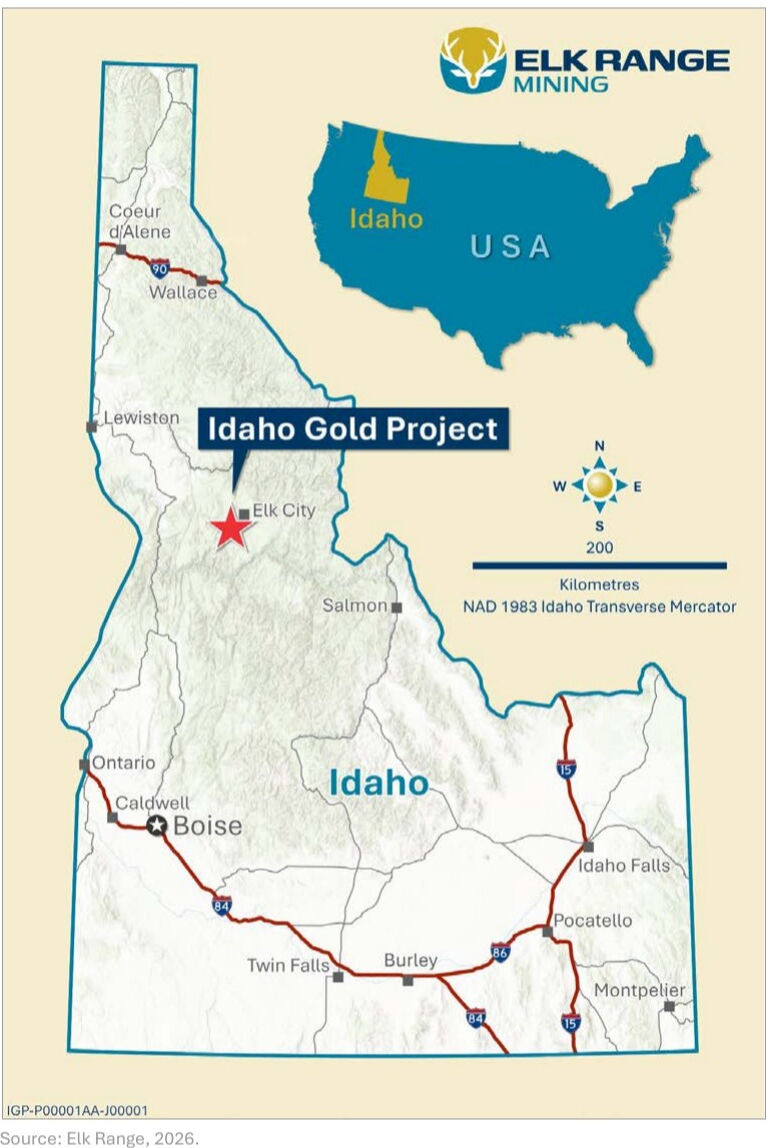
Figure 1. Location of the Idaho Gold Project near Elk City, central Idaho. (Source: IPO prospectus)
Everything Elk Range owns sits within the Orogrande Mining District near Elk City, in Idaho County, Idaho. The assets line up along the Orogrande Shear Zone, a regional-scale fault corridor (a long zone of broken and displaced rock) that the prospectus links to gold mineralisation and a string of historical mining centres. The project spans four elements: the flagship Friday Gold Mine, the Orogrande Processing Plant, and the Buffalo Gulch and Deadwood exploration prospects.
Table 3: The four components of the Idaho Project

Patented vs unpatented claims. Under the US Mining Law of 1872, a patented claim is one where the US government has passed full title to the holder. An unpatented claim gives only a possessory right to extract minerals; the underlying land stays under what the prospectus calls "the paramount title of the United States", and the holder must pay annual maintenance fees to keep it alive.
The Friday Gold Mine and its lease
Friday is the centrepiece. Previous operators built underground access through a portal and decline (an access tunnel that slopes down into the mine), and underground mining most recently restarted under prior owner Endomines in May 2020. After two short mining periods and roughly 7,200 tonnes of ore, the mine was placed on care and maintenance in February 2022, which the prospectus attributes to Covid-19 and broader operational factors.

Figure 2: Friday Project location (Source: IPO Prospectus)
Elk Range does not own Friday outright. It holds the mine through the Friday Lease, under which its US subsidiary Elk Range Minerals LLC is the lessee and Premium Exploration USA, Inc. is the lessor. The lease grants Elk Range the right to mine underground mineralisation averaging 2 grams of gold per tonne or higher. Premium retains the rights to lower-grade material below 2 g/t, including potential future open-pit mining. The lease began on 23 April 2015, runs for an initial 20 years to April 2035, and carries an option to extend for a further 20 years.

Figure 3: Friday Project leases (Source: IPO Prospectus)
The Orogrande Processing Plant gives the company optionality. The prospectus describes it as able to process sulphide ore at about 6.4 tonnes per hour through crushing, grinding, gravity and flotation circuits, with supporting infrastructure that includes an assay laboratory, workshops, a camp and mobile mining equipment. Whether the plant is ever restarted depends on permit transfers, technical studies, funding, economics and board approval.

Figure 4: The Orogrande Processing Plant (Source: IPO Prospectus)
Buffalo Gulch and Deadwood
The two satellite prospects add what the prospectus calls district-scale exploration upside. Both sit on the Orogrande Shear Zone, both carry historically identified gold mineralisation, and both are described as prospective for near-surface oxide gold (weathered, more easily leached material) and deeper sulphide gold. No exploration at either is currently planned; the near-term drilling budget is directed at Friday.
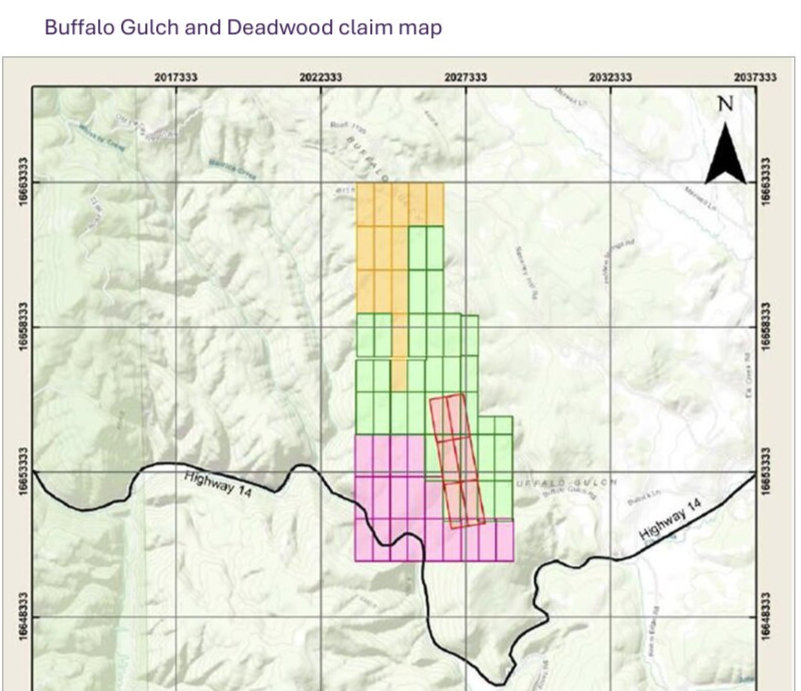
Figure 5: Claim map (Source: IPO Prospectus)
Section 03 — Strategy and work program
The plan: de-risk the historical data, then drill
Elk Range frames its strategy as disciplined, staged advancement rather than a production rush. Over the 12 to 24 months after listing, it intends to validate, digitise and reinterpret decades of historical geological, drilling and production data, then run modern drilling, geological modelling and quality-control programs aimed at supporting a future JORC-compliant Mineral Resource estimate where the results justify one. The company states its initial focus is on exploration, technical evaluation and resource growth, not near-term mining.
The JORC Code is the Australasian standard for publicly reporting exploration results and resources. A "Mineral Resource" under that code is a concentration of minerals with reasonable prospects for eventual economic extraction, classified by geological confidence. Elk Range does not have one yet; producing one is the central goal of the work program, and it is the trigger for several of the company's incentive and vendor payments (covered later).
The first drilling program at Friday
The company plans an initial exploration and validation program of 10 diamond drillholes totalling 11,900 feet, drilled from surface and focused on the five patented lease claims at Friday. The holes are designed to test and confirm historical high-grade intersections, improve confidence in the known mineralised zones, and probe extensions down-plunge and along-strike from the existing underground workings. Elk Range estimates an all-in cost of about US$892 per metre and a total program budget of roughly A$3.21 million.
Table 4: Drilling Budget

The independent geologist notes that a LiDAR survey (airborne laser mapping for accurate topography) would be worthwhile but is not included in the planned budget. No exploration at Buffalo Gulch or Deadwood is currently planned.
Section 04 — Geology, history and historical drilling
A century of mining, and a large historical dataset
Gold has been worked in the Orogrande district for a long time. The prospectus records placer gold (loose gold in stream gravels) first found in the 1850s, and hard-rock mining beginning in 1903 at the Hogan mine on Friday ground. The independent geologist, AMC Consultants, describes the mineralisation across the assets as a low-sulphidation mesothermal vein system, meaning gold deposited from warm mineralising fluids moving through fault and shear structures at moderate depth.

At Friday, gold sits mainly between two faults (named the Friday and Monday faults) and comes in two styles: broad zones of lower-grade disseminated gold, and higher-grade gold and silver where the rock is more intensely sheared, particularly next to a non-mineralised dacite dyke (a sheet of volcanic rock cutting across the host). The long section below shows the historical underground development, the base of oxidation, and a plunging high-grade shoot that the geologist notes is "not in resource", a reminder that these are historical intercepts rather than a classified resource.
A long line of past operators
The project has passed through many hands, each of which added to the exploration record. The prospectus lists Bema Gold in the 1980s, Idaho Consolidated Metals from the early 1990s, Cyprus in 1996 to 1997, Kinross in 1998, Canden in 2002, Beartooth Platinum in 2004, Premium Exploration from 2009 to 2014, and Endomines from 2018 to 2022. In total the geologist reports about 386 drillholes and more than 145,000 feet of drilling at Friday alone, with a further 180 holes (31,816 feet) at Buffalo Gulch and 65 holes (21,371 feet) at Deadwood.
The resource position: historical and foreign, not JORC A resource estimate was prepared for Friday and Buffalo Gulch by Hard Rock Consulting in 2017, but the prospectus and the independent geologist are clear that it is both a "foreign estimate" and a "historical estimate": it was prepared under Canadian (CIM) standards, not the JORC Code, before Endomines owned the project. Elk Range and its Competent Person have not done enough work to classify any of it as a Mineral Resource under JORC, and the prospectus does not reproduce any tonnage, grade or ounce figures from it. There is no current JORC Mineral Resource for any Elk Range asset. Investors are cautioned that historical estimates should not be relied upon.
Historical drilling highlights
The geologist reports a table of significant historical intersections at Friday. These are exploration results, not a resource, and AMC states it has not independently verified them. They do, however, illustrate the high-grade character the company is chasing. A selection (grade shown as grams of gold per tonne, "g/t", over a drilled interval):
Table 5: Historical drilling Highlights

Historical metallurgical testwork is also encouraging on paper. At Friday, 2011 bottle-roll leach tests on 13 samples averaged 86.2% gold recovery, and 2016 flotation composites averaged 94.3% and 95.6%. At Buffalo Gulch, a 1989 agglomerated heap-leach test recovered 95% of the gold over 32 days. The company presents these as supportive of future processing routes, not as guarantees.
Section 05 — People
Board and management
Elk Range lists on admission with a four-person board, three of whom it considers independent, plus a chief executive. The prospectus notes the company will not have separate audit and risk or remuneration committees at listing, given the board's size, with the full board carrying out those functions.
Table 6: Board and Management

Fees are annual and exclusive of superannuation. Leanne Kite's A$260,000 comprises A$200,000 for the CFO role and A$60,000 for the executive director role.
Section 06: Capital, ownership and the acquisition
The capital structure and who owns what
Before the offer, Elk Range has 29,329,004 shares on issue. On admission, that grows to between 109.4 million and 126.1 million shares once the IPO shares, the conversion of a A$5 million convertible note, the shares to vendor Endomines, and smaller issues are added. Shares sold under the IPO will represent roughly 32% of the enlarged capital at the minimum subscription and 39.6% at the maximum. The company's free float is expected to be at least about 63% (minimum) to 66% (maximum).
Table 7: Capital Structure

The convertible notes were a pre-IPO raise: A$5,000,000 across 5,000 notes of A$1,000 each, carrying 8% annual interest and converting into shares at the lesser of 80% of the IPO price or A$0.58. They are expected to convert on listing. Directors and management hold both shares and some of these notes.
Table 8: Convertible Notes

A large share of the register is expected to be subject to ASX escrow (a mandatory holding lock): roughly 26.7 million shares, 14.3 million performance rights and the lead manager options for up to 24 months, and a further 13.8 to 15.4 million shares for 12 months. None of the shares issued under the IPO offer are subject to escrow.
The Endomines acquisition: about A$20 million, mostly deferred
Elk Range acquired the Idaho Gold Project from Endomines under an asset purchase and sale agreement, completed on 24 February 2026. The headline consideration is roughly A$20 million, but only A$3.5 million was paid in cash upfront. The rest is spread across share issues, milestone payments tied to defining a JORC resource, and time-based cash payments, with the whole obligation secured against the project. Crucially, several of the large payments are only triggered if the company succeeds in defining substantial gold resources.
Table 9: Edomines Acquisition payments

"Moz" means million ounces; "0.4 g/t cut-off" is the minimum grade counted in a resource. Endomines' shareholding is capped at 10%. Elk Range granted security (a mortgage of US$14,142,000) over the project in Endomines' favour.
Performance rights tied to finding gold
Elk Range has 17,000,000 performance rights on issue, held by directors and the CEO. Performance rights are a right to be issued a share for no payment once conditions are met. Most of these conditions mirror the vendor milestones: defining JORC resources of 0.5 million and 1.0 million ounces, plus acquiring Premium's lower-grade rights, and each also requires the share price (20-day average) to be at least A$0.20. All expire on 30 November 2030.
Table 10: Performance Rights

Recipients: Campbell Baird 5,000,000; Leanne Kite 5,000,000; Edward Keys 4,000,000; Frazer Tabeart 1,500,000; Rafael Moreno 1,500,000. The independent expert notes that if every performance security converted, they would represent about 65.79% of issued capital on a minimum-subscription basis.
Royalties over the project
The Idaho Gold Project carries a stack of third-party net smelter return (NSR) royalties, a share of revenue from any gold sold. Most are capped. The company would also have to deliver the first six 10-ounce gold bars from each mine placed into production to certain historical beneficiaries.
Section 07: Financials
Financial position
As an exploration company, Elk Range has no revenue and expects losses for the foreseeable future. For its first reporting period (16 February 2025 to 31 December 2025) it recorded a loss after tax of A$201,864 and held A$227,499 in cash at 31 December 2025. The picture that matters for investors is the pro-forma balance sheet, which restates the position as if the acquisition, the convertible note and the offer had all happened by that date.
Table 11: Financial Position

The plant and equipment was independently valued at US$1.4 million. The A$12.8 million deferred consideration is the accounting value of the future Endomines milestone and time payments. The auditor issued an unmodified opinion on the historical accounts but drew attention to a material uncertainty related to going concern; the directors state that, with the offer proceeds, the company will have the funds to operate as a going concern.
Section 08: Risks
What the prospectus flags as the key risks
The prospectus devotes a full section to risk and stresses the shares are highly speculative. The list below summarises the company and industry-specific risks it identifies. It is not exhaustive, and general market risks (economic conditions, equity market volatility, currency movements, commodity prices and public-health events) apply on top.
Mineral rights and lease structure: Elk Range can only mine underground gold averaging 2 g/t or higher; Premium keeps the lower-grade and potential open-pit rights, and has a conditional agreement to sell the underlying patented claims.
Mineral claims and title: Unpatented claims sit under the paramount title of the US government and can be challenged; a successful challenge could void or shrink them.
Acquisition and deferred consideration: Large future payments are owed to Endomines and secured against the project; failure to meet them could affect the company's interest in the assets.
Title, tenure and permits: Some permits remain in a previous owner's name and are still being transferred; there is no guarantee they will all transfer or renew on time.
Environmental and historical mining: Old workings and waste rock may carry liabilities; a Phase I environmental assessment identified certain "Recognised Environmental Conditions".
Royalties and production obligations: Multiple third-party royalties and a historical gold-delivery obligation could affect the economics of any future mining.
Nature of exploration: Exploration is inherently speculative; there is no assurance it will define an economic resource.
Historical and foreign estimates: The historical resource data is not JORC-compliant and may not convert into a JORC resource.
Operational and infrastructure: The mine and plant are on care and maintenance; there is no assurance they can be restarted on acceptable terms.
Liquidity and escrow: Existing holders will own a large share of the register, much of it locked in escrow for up to 24 months, which may limit trading liquidity.
Foreign operations: All the material assets are in the United States, exposing the company to US federal, state and local law, permitting and currency movements.
Funding and going concern: The company has no revenue and will need ongoing funding; there is no assurance further capital will be available on acceptable terms.
Section 09: Independent reports
What the independent experts concluded
Four independent reports are attached to the prospectus. In brief:
Table 12: Independent Report

Samso Concluding Comments
Elk Range Mining is seeking A$7 million to A$10 million at 20 cents per share to list on the ASX and fund the next phase of work in a historical gold district in Idaho. The pitch, in the company's own words, rests on a rare combination of established infrastructure (a high-grade underground mine and a processing plant), a large historical dataset, and district-scale exploration ground, all in a mining jurisdiction familiar to investors.
Against that, the prospectus is candid about what has not yet been proven. There is no JORC resource today; the historical estimates are not compliant, and no figures are disclosed; the flagship mine and plant are idle; the company holds Friday under a lease that restricts it to higher-grade underground ore; a substantial deferred consideration is owed to the vendor; and much of the register is locked in escrow. The document repeatedly describes the shares as highly speculative and urges investors to read it in full and seek professional advice. This coverage is a guide to what it says, not a substitute for that reading.

The Samso Way – Seek the Research
Here at Samso, we pride ourselves on delivering content for investors that is independent and informed by over three decades of experience in the industry. Our content is well-researched and is only created if I see merit in discussing the company's story.
Our mission is simple: cut through the noise and spotlight what matters—genuine stories, grounded insights, and real opportunity.
Our content is well-researched and is only created if the team sees merit in discussing the company or concept. Investors can explore our three core platforms:
There may be numerous paths to success in investing, but the common thread among successful individuals is that they remain committed to making informed decisions. Equip yourself with the right knowledge and tools, and you will be well on your way to achieving your financial goals.
Most importantly, investors need to be absolutely diligent in understanding their own risk-reward tolerance and capabilities. Never bite off more than you can chew. As they say, Rome wasn’t built in a day, and the Great Wall stood because it took centuries to complete.
The Samso Philosophy:
Stay curious. Stay sharp. And remember—digging deeper always uncovers the real value.
In Life, there is no such thing as a Free Lunch.
Never bite off more than you can chew is my parting comment.
Happy Investing, and the only four-letter word you need to know is DYOR.
To support our independent nature of our work, please head over to our Support Page and give us a helping hand in any of the ways listed. This is a new initiate for the Samso Platform, and it was always the concept of Samso when we started this journey in 2018.
Disclaimer
The information or opinions provided herein do not constitute investment advice, an offer, or solicitation to subscribe for, purchase, or sell the investment product(s) mentioned herein. It does not take into consideration, nor have any regard to your specific investment objectives, financial situation, risk profile, tax position and particular, or unique needs and constraints.
If you find this article informative and useful, please help me share the information. I try to write about topics that are interesting and have the potential to be of investment value. It is not easy to find stories that fit those parameters. If you or your organisation sees the benefit of what Samso is trying to achieve and has a need to share your journey, please contact me at noel.ong@samso.com.au.
Samso is a trusted platform that equips dedicated investors with up-to-date industry knowledge and insigh0ts from top CEOs and thought leaders. By staying informed on business advancements and market trends, investors can enhance their financial decisions through a combination of expert guidance and their own research.
Samso News | www.samso.com.au | An Investor Lens on ASX-Listed Companies


Comments