SAMSO
INDEPENDENT RESEARCH MEDIA FOR THE ASX. DEPTH OVER HYPE.

Samso Search Results
Search this site
1101 results found with an empty search
- Do ASX Companies Need to Brand?
Rooster Talk Episode 20 with Veronica Lind, Business and Marketing Strategist, Vermilion Pinstripes In this episode of Rooster Talk, Samso is talking to Veronica Lind from Vermilion Pinstripes, who is a “Modern Marketing” practitioner. I met Veronica through my Rooster Talk with one of her clients, My Blue Tea. I was impressed with her website and the way it was managed and she introduced me to the creator of the website. To cut a long story short, I contacted Veronica and we had a great conversation about marketing and business development. I engaged Veronica to refocus and re-label Samso. Rooster Talk – Episode 014 – The Malaysian Superfood – My Blue Tea. “Vermilion Pinstripes is the creator of growth” Vermilion Pinstripes is an international modern sales marketing and communications agency driven by a singular mission: To help businesses thrive with confidence. We harness the power of our collective expertise in business, communications, marketing and technology to help brands achieve their goals. This is through our Modern Marketing framework which guides teams to orchestrate the customer’s journey as one voice, one brand. We are operating in The Experience Economy today and Modern Marketing empowers experienced B2B business, marketing and communications professionals on their journeys of growth for their brands. One of our common discussion topics was Branding. We discussed the need and why and how people don’t succeed in this area due to a lack of understanding and how to practice good branding. I felt that this was a great topic to share and with Veronica’s “Modern Marketing” way of getting messages out to the marketplace. Today, we all look at marketing as a myriad of social media platforms. Market participants are not utilising all the tools and at the same time, they are also overemphasising the many tools as opposed to utilising quality tools. It was this reason that I felt it wise to share Veronica’s thoughts and how she views the art of Branding in today’s business community. I hope you will get some value from the interview and will add to your marketing experience. Watch the interview here by clicking this link or see the video above. Before you watch the video, remember to click here Subscribe to the Samso Media Channel or click on the Subscribe button at the end of the video. For further information about Coffee with Samso and Rooster Talks visit: www.samso.com.au or contact noel.ong@samso.com.au PODCAST Disclaimer The information or opinions provided herein do not constitute investment advice, an offer or solicitation to subscribe for, purchase or sell the investment product(s) mentioned herein. It does not take into consideration, nor have any regard to your specific investment objectives, financial situation, risk profile, tax position and particular, or unique needs and constraints. Read full Disclaimer. www.samso.com.au If you find this article informative and useful, please help me share the information. I try and write about topics that are interesting and have the potential to be of investment value. It is not easy to find stories that fit those parameters. If you or your organisation see the benefit of what Samso is trying to achieve and have a need to share your journey, please contact me on noel.ong@samso.com.au. About Samso
- COMPLII and Compliance with the ASX
Rooster Talk Episode 8 with Tony Cunningham, Director & Founder, CPS Capital In this episode of Rooster Talk, we are talking about COMPLII with Tony Cunningham. Tony is the founder of CPS Capital which is a stockbroking firm based in Perth, Australia. He is also the founder of Stocks In Play. Tony and I have known each other since the mid-1980s and it was a great conversation about what COMPLII is about and how this is changing the way brokers in the stock market are raising funds. The efficiency and the speed of the process are what COMPLII is all about. PODCAST Disclaimer The information or opinions provided herein do not constitute investment advice, an offer or solicitation to subscribe for, purchase or sell the investment product(s) mentioned herein. It does not take into consideration, nor have any regard to your specific investment objectives, financial situation, risk profile, tax position and particular, or unique needs and constraints. Read full Disclaimer. www.samso.com.au If you find this article informative and useful, please help me share the information. I try and write about topics that are interesting and have the potential to be of investment value. It is not easy to find stories that fit those parameters. If you or your organisation see the benefit of what Samso is trying to achieve and have a need to share your journey, please contact me on noel.ong@samso.com.au. About Samso
- Another Giant Gold Discovery!
Coffee with Samso Episode 52 with Rob Longley, Managing Director of Ardiden Limited (ASX: ADV) Hollywood Results Canadian Geology and Giant Mines are synonymous when you talk mining in the North American Mining Industry. Having a large exploration package within the Land of the Giants is what I called stacking your bets. When I first came across Ardiden Limited (ASX: ADV), I was immediately drawn to the large land holding at Pickle Lake. A small cap exploration company on the Australian Stock Exchange (ASX) with a land package over 800 square kilometres in an area of known mineralisation and working mines is not something ordinary. I do not know of one place that is easy to work in, so granting that this is not the easiest of places to work in and taking into consideration all the "other issues", Rob Longley and his team are taking the best approach in the search for the "holy grail" and that is to systematically work through the information and not rush into chasing "Hollywood Results". In this episode of Coffee with Samso, Rob Longley shares with us the significance of the geology, the potential of the land package and how the company slowly works through the numerous targets that have already presented themselves. About Rob Longley Rob Longley is a Geologist with extensive experience in global resources across gold, nickel, cobalt, lithium and iron ore sectors. Rob was Managing Director of Helios Gold Limited and prior to that was General Manager Geology for Sundance Resources in Africa from 2007 to 2015. Rob has an impressive track record of successfully managing and executing exploration programs in difficult and remote locations while delivering progressive results with Mineral Resources that bring shareholder value, underpinning the developments of mineral projects. Rob is well-respected in the industry for his professional integrity, his resource growth achievements and commercial leadership. PODCAST About Ardiden Limited Ardiden Limited (ASX: ADV) is an ASX-listed exploration company focused on building compelling gold resources at its 100%-owned Pickle Lake Gold Project in one of Canada’s most prolific gold mining districts in Northwest Ontario, Canada. The project consists of over 664km2 of highly prospective landholding across three Deposits, Kasagiminnis (Kas), Dorothy and Dobie Gold Deposit. Ardiden has a maiden Inferred 110,000oz high-grade gold resource (790,000t @ 4.3g/t Au) at the Kasagiminnis Gold Deposit and in May 2020 defined an exploration target of 500,000oz to 1.2Moz @ 3.9 – 6.6g/t Au. The Deposit represents only a small section (600m) of a continuous 120km strike length at the flagship Pickle Lake Gold Project. During 2020, Ardiden aims to build on this Resource at Kasagiminnis with definition drilling as well as applying modern exploration technique to unlock value at its highly prospective numerous prospects, identified in June 2020 through interpretation of various geological and geophysical data sets. Initial exploration of these targets has been very encouraging. Ontario is a tier-one mining jurisdiction and produced 2.5Moz gold in 2018, nearly half of Canada’s total annual gold production. The Province hosts 18 active gold mining projects. Ardiden also has 100% ownership of the Seymour Lake Lithium Project in Ontario, where it is seeking a partner or alliance to draw value from the project, as well as other lithium interests in Ontario including the Root Lake and Wisa Lake Lithium Projects. Disclaimer The information or opinions provided herein do not constitute investment advice, an offer or solicitation to subscribe for, purchase or sell the investment product(s) mentioned herein. It does not take into consideration, nor have any regard to your specific investment objectives, financial situation, risk profile, tax position and particular, or unique needs and constraints. Read full Disclaimer. Share to Grow: Your Bonus Samso has just released an eBook: How to Add Value to your Share Portfolio A lesson on geological models sought by mining companies that gives insight and an understanding of which portfolios are better - and potentially more lucrative – investments. Click here to download this eBook. If you find this article informative and useful, please help me share the information. I try and write about topics that are interesting and have the potential to be of investment value. It is not easy to find stories that fit those parameters. If you or your organisation see the benefit of what Samso is trying to achieve and have a need to share your journey, please contact me on noel.ong@samso.com.au. About Samso
- Understanding Resources and Investments in Australia - A Resurgence of the Mineral Resource Industry in 2025.
Australia is a country rich in natural resources and investment opportunities. With its vast landscapes and diverse economy, it provides a compelling environment for both domestic and international investors. In this blog post, we will explore the various resources available in Australia and how they impact investment opportunities across the nation. Resources Investments in Australia Australia is known for its wealth of natural resources, from minerals and oil to agriculture and renewable energy. The mining sector, in particular, has been a significant contributor to the country's economy. According to Deloitte Access Economics, the estimated total (direct + indirect) value added from the mining & METS sector at approximately AUD 242 billion in 2019–20, equivalent to about 12.4% of GDP. This sector includes the extraction of valuable minerals such as iron ore, gold, coal, and natural gas. The value of exports from mining activities further demonstrates the significance of this sector. For example, in 2022, iron ore exports alone were valued at nearly AUD 133 billion, showcasing Australia's strong position in the global market. Investments in the mining sector provide substantial returns and contribute to job creation, economic growth, and infrastructure development. Mining site showcasing Australia's vast resources Key Resources Driving Investments Minerals Australia is the leading global exporter of several key minerals. As the world's largest producer of lithium, which is essential for battery technology, the demand for Australian lithium has skyrocketed with the rise of electric vehicles. This positions Australia as a critical player in the renewable energy revolution. Energy The country also possesses rich energy resources, including coal, natural gas, and renewables like solar and wind. Australia is the second-largest exporter of coal globally, which has historically contributed significantly to its GDP. However, there is a growing shift towards renewable energy investments as the world moves towards more sustainable sources. The government has made ambitious commitments to reduce carbon emissions, incentivizing renewable energy projects across the country. Agriculture Agriculture remains a fundamental part of the Australian economy. The country produces a wide range of products, including wheat, beef, and wool. Australian agriculture is characterized by high-quality products that enjoy strong demand in international markets. With advancements in agricultural technology, investments in this sector are becoming increasingly attractive. Wheat field showcasing Australia's agricultural potential Trends in Resource Investments A myriad of trends are influencing resource investments in Australia today. For investors, it's essential to stay abreast of these trends to make informed decisions. Sustainability and Green Investment Sustainability has become a major focus in the Australian investment landscape. Given global concerns about climate change, there is a shift towards investments that prioritize environmental responsibility. This shift is driving innovations in renewable energy technologies and leading to increased funding for sustainable practices across industries. Technological Advancements The introduction of new technologies, such as artificial intelligence and blockchain, is reshaping the investment landscape. In mining, for example, companies are exploring automation and data analytics to streamline operations and improve efficiency. Investors can benefit from opportunities that leverage these technologies for long-term growth. Government Policies and Incentives Government policies play a crucial role in shaping investment opportunities. Australia's government has been proactive in promoting foreign investment, particularly in the resources sector. The establishment of infrastructure projects designed to enhance transportation and accessibility boosts investor confidence. Various tax incentives and grants are also available, encouraging further investment in critical sectors. Solar panels showcase the transition to renewable energy sources Navigating Investment Opportunities For both seasoned and novice investors, understanding the landscape of resources and investments in Australia is critical. Here are some actionable steps to navigate these opportunities effectively: Conduct Thorough Research Before investing, it is essential to research market trends, potential risks, and sector performance. Use resources like the Australian Bureau of Statistics and industry reports to get a comprehensive understanding of the current market. Diversification of Investments Diversification is key to managing risk. Consider investments across various sectors such as mining, agriculture, and renewable energy to balance your portfolio. This strategy ensures that you are not overly reliant on a single sector's performance. Networking and Partnerships Building a network within the Australian investment community can open doors to new opportunities and insights. Consider joining local investment groups, attending seminars, or connecting with industry experts in your area of interest. Utilize Technology and Data Leverage technology to enhance your investment strategy. Tools that provide data analytics, market comparisons, and trend forecasts can help you make informed decisions and adapt your strategies accordingly. Be Mindful of Regulatory Changes Keep an eye on changes in legislation or regulations that may affect your investments. Governments can introduce new policies that could impact various sectors, so staying informed will allow you to adjust your investments in response. Investing in Australia’s rich resources can lead to substantial financial rewards. However, it is essential to approach the investment landscape with careful consideration, utilizing available resources to navigate this dynamic environment effectively. The opportunities are vast, and with the right strategies, investors can achieve remarkable success. Future of Resources Investments in Australia The prospects for Resources Investments in Australia look promising. As global demand for minerals and energy resources continues to grow, Australia remains a pivotal player in the international market. With the push for sustainability, there will be an increasing number of projects that focus on environmentally friendly practices. Adapting to market trends, such as the rise of green technologies and the increasing appeal of agricultural investments, will ensure that investors remain competitive. Additionally, incorporating innovative solutions—such as automation in the mining industry and advanced farming technologies—will further enhance the growth potential. The June 2025 Resources & Energy Quarterly projects total resource and energy export earnings to fall from A$385 billion in FY2024–25 to A$369 billion in FY2025–26, and further to A$352 billion in FY2026–27. But beneath that decline lurks strong growth in export volumes for high-demand minerals, helping sustain regional economies. Gold is set to become Australia’s third-largest resource export behind iron ore and LNG, with forecast earnings of A$56 billion in FY2025–26—up from ~A$52 billion a year earlier. Production is expected to rise to 289 tonnes in 2025–26 and 313 tonnes in 2026–27. Copper exports are projected to grow over 25%, reaching A$16.7 billion in FY2026, and continue expanding to over A$18 billion by FY2027, powered by demand from the EV and renewable energy sectors. In conclusion, the Australian resource sector is ripe with opportunities for ambitious investors. By understanding the intricacies of the market, being mindful of emerging trends, and navigating the investment landscape strategically, individuals and organisations can capitalize on Australia's abundant resources. Whether it's mining, energy, or agriculture, the possibilities for investment in Australia are extensive and promising. For more information on investing and resources in Australia, visit samso australia. Cover photo: TRUCKS HAUL COAL FROM THE NAVAJO MINE TO THE FOUR CORNERS GENERATING PLANT - NARA - 544169, Lyntha Scott Eiler. Public domain, via Wikimedia Commons (https://commons.wikimedia.org/wiki/File:TRUCKS_HAUL_COAL_FROM_THE_NAVAJO_MINE_TO_THE_FOUR_CORNERS_GENERATING_PLANT_-_NARA_-_544169.jpg). Reproduced photograph, shown faded under a navy overlay on the article thumbnail. The Samso Way – Seek the Research Here at Samso, we pride ourselves on delivering content for investors that is independent and informed by over three decades of experience in the industry. We are always asking the question that may sound simple and irrelevant, but these are typically the ones that make sense to you, the one seeking the knowledge. Our mission is simple: cut through the noise and spotlight what matters—genuine stories, grounded insights, and real opportunity. Our content is well-researched and is only created if the team sees a merit in discussing the company or concept. Investors can explore our three core platforms: Coffee with Samso Samso Insights Samso News There may be numerous paths to success in investing, but the common thread among successful individuals is that they remain committed to making informed decisions. Equip yourself with the right knowledge and tools, and you will be well on your way to achieving your financial goals. Most importantly, investors need to be absolutely diligent in understanding their own risk-reward tolerance and capabilities. Never bite off more than you can chew. As they say, Rome wasn’t built in a day, and the Great Wall stood because it took centuries to complete. The Samso Philosophy: Stay curious. Stay sharp. And remember—digging deeper always uncovers the real value. In Life, there is no such thing as a Free Lunch. Happy Investing, and the only four-letter word you need to know is DYOR. To support our independent nature of our work, please head over to our Support Page and give us a helping hand in any of the ways listed. This is a new initiate for the Samso Platform, and it was always the concept of Samso when we started this journey in 2018. Disclaimer The information or opinions provided herein do not constitute investment advice, an offer or solicitation to subscribe for, purchase or sell the investment product(s) mentioned herein. It does not take into consideration, nor have any regard to your specific investment objectives, financial situation, risk profile, tax position and particular, or unique needs and constraints. Read full Disclaimer. Share to Grow: Your Bonus Samso has just released an eBook: How to Add Value to your Share Portfolio A lesson on geological models sought by mining companies that gives insight and an understanding of which portfolios are better - and potentially more lucrative – investments. Click here to download this eBook. Download eBook If you find this article informative and useful, please help me share the information. I try and write about topics that are interesting and have the potential to be of investment value. It is not easy to find stories that fit those parameters. If you or your organisation see the benefit of what Samso is trying to achieve and have a need to share your journey, please contact me at noel.ong@samso.com.au. About Samso Samso is a trusted platform that equips dedicated investors with up-to-date industry knowledge and insights from top CEOs and thought leaders. By staying informed on business advancements and market trends, investors can enhance their financial decisions through a combination of expert guidance and their own research.
- CIT Partnership Expands OpenLearning’s Reach in Southeast Asia Education.
Announcement OpenLearning Signs A$340,000 Platform SaaS Agreement With Cebu Institute of Technology University. OpenLearning Limited (ASX: OLL) has taken a significant step in its Southeast Asian growth strategy with a five-year, usage-based SaaS agreement with Cebu Institute of Technology University (CIT) in the Philippines. Valued at a minimum of A$340,000 over the term, the deal will see OpenLearning’s AI-powered Learning Management System (LMS) implemented across all faculties and programs at one of the country’s most respected private universities. More than a new client, this partnership marks a strategic entry into a higher education market of over 3.4 million students, where digital transformation is gaining momentum. CIT’s choice, following a competitive review of multiple LMS providers, reinforces the demand for platforms that enhance engagement, graduate employability, and institutional efficiency. With outcome-based education tools, an ePortfolio system, and generative AI course design, OpenLearning is well-placed to support the shift toward modern, industry-relevant learning across the region. Highlights - Expanding the Education Grip in South East Asia. Five-Year Agreement — CIT will utilise OpenLearning’s LMS for a minimum of 20,000 students annually. Contract Value — Minimum SaaS fees of approximately A$340,000 (US$221,000) over five years, with potential upside from increased usage. Competitive Win — CIT selected OpenLearning after evaluating multiple LMS providers. Regional Growth — Strengthens OpenLearning’s position as a leading AI-powered LMS provider in Southeast Asia. Strategic Significance Founded in 1946 and recognised nationally for excellence in engineering, architecture, IT, health sciences, business, and education, CIT University is known for producing industry-preferred graduates and board exam topnotchers. Its decision to adopt OpenLearning’s platform reinforces the company’s market position in the Philippines, a higher education sector with more than 3.4 million students and a rapidly growing adoption of digital learning solutions. OpenLearning’s LMS integrates outcome-based education tools, an ePortfolio system, and generative AI course design capabilities, providing universities with solutions to improve student engagement, graduate employability, and institutional efficiency. OpenLearning CEO Adam Brimo commented: "Partnering with a leading private university in south-central Philippines which has been recognised as a Centre of Excellence in Information Technology Education is a strong endorsement of our platform’s capabilities and the shared vision between CIT University and OpenLearning to enable industry-relevant education. By combining CIT University’s expertise in engineering and innovation with our AI-powered LMS, we can help create a dynamic learning environment that prepares graduates for success in the modern workforce. This partnership reflects a shared commitment to quality, innovation, and scalable impact.” Agreement Terms The deal commences on 12 August 2025 and includes standard SaaS contract provisions such as termination clauses, service level agreements, and compliance requirements with Philippine regulations. While the minimum annual fees are not financially material, the agreement is strategically important as CIT will adopt the LMS university-wide. Samso Concluding Comments This agreement with Cebu Institute of Technology University is a reminder that in education technology, credibility is built through results and relationships. CIT’s choice to roll out OpenLearning’s platform university-wide is a strong endorsement of its capabilities, particularly in delivering outcome-based, industry-relevant education at scale. While the minimum contracted value may not appear material in dollar terms, the strategic weight lies in market positioning. The Philippines’ higher education sector is vast and increasingly digital, and winning a respected institution like CIT provides a launchpad for broader adoption. It also reflects a shift in how universities evaluate partners — beyond basic functionality, they now seek platforms that can improve graduate readiness, foster innovation, and integrate seamlessly with academic and administrative workflows. OpenLearning’s blend of AI capabilities, engagement tools, and proven track record fits well with these expectations. For investors, this is an incremental but telling move in OpenLearning’s regional growth story. The challenge now is to leverage this success into further institutional wins, building a network effect that cements its position in the competitive Southeast Asian edtech landscape. Cover photo: UW Baraboo Lecture Hall, JackFromWisconsin. CC0, via Wikimedia Commons (https://commons.wikimedia.org/wiki/File:UW_Baraboo_Lecture_Hall.jpg) The Samso Way – Seek the Research In education technology, institutional trust is hard-earned and easily lost. This agreement is a reminder that competitive wins often hinge on the ability to deliver measurable outcomes — in this case, enhancing student engagement and graduate employability. As always, the key lies in understanding the market, validating the value proposition, and building partnerships that scale. Our mission is simple: cut through the noise and spotlight what matters—genuine stories, grounded insights, and real opportunity. Our content is well-researched and is only created if the team sees a merit in discussing the company or concept. Investors can explore our three core platforms: Coffee with Samso Samso Insights Samso News There may be numerous paths to success in investing, but the common thread among successful individuals is that they remain committed to making informed decisions. Equip yourself with the right knowledge and tools, and you will be well on your way to achieving your financial goals. Most importantly, investors need to be absolutely diligent in understanding their own risk-reward tolerance and capabilities. Never bite off more than you can chew. As they say, Rome wasn’t built in a day, and the Great Wall stood because it took centuries to complete. The Samso Philosophy: Stay curious. Stay sharp. And remember—digging deeper always uncovers the real value. In Life, there is no such thing as a Free Lunch. Happy Investing, and the only four-letter word you need to know is DYOR. To support our independent nature of our work, please head over to our Support Page and give us a helping hand in any of the ways listed. This is a new initiate for the Samso Platform, and it was always the concept of Samso when we started this journey in 2018. Disclaimer The information or opinions provided herein do not constitute investment advice, an offer or solicitation to subscribe for, purchase or sell the investment product(s) mentioned herein. It does not take into consideration, nor have any regard to your specific investment objectives, financial situation, risk profile, tax position and particular, or unique needs and constraints. Read full Disclaimer. Share to Grow: Your Bonus Samso has just released an eBook: How to Add Value to your Share Portfolio A lesson on geological models sought by mining companies that gives insight and an understanding of which portfolios are better - and potentially more lucrative – investments. Click here to download this eBook. Download eBook If you find this article informative and useful, please help me share the information. I try and write about topics that are interesting and have the potential to be of investment value. It is not easy to find stories that fit those parameters. If you or your organisation see the benefit of what Samso is trying to achieve and has a need to share your journey, please contact me at noel.ong@samso.com.au. About Samso Samso is a trusted platform that equips dedicated investors with up-to-date industry knowledge and insights from top CEOs and thought leaders. By staying informed on business advancements and market trends, investors can enhance their financial decisions through a combination of expert guidance and their own research.
- The Big Consolidation — where the gold price settles before its next move
Companion to "The Gold Question — pathways & ASX equity implications" (June 2026) A view built on three decades of gold cycles Our June note mapped the three pathways gold could take. Two weeks later the market chose: another leg down, an eight-month low, and a Fed openly discussing hikes. This note does what the pathways piece deliberately didn't — it names a settling price. Thirty years of gold corrections say the question is never the drawdown; it is whether the buyers underneath it have changed. This note argues they haven't, puts a number on where the price bases, and draws the lessons the equities have taught since June. Samso Insights Research Commodity - Gold Samso Strategy Series WHAT THIS PIECE COVERS 1.00 WHERE THE GOLD PRICE STANDS From US$5,600 to US$4,000 in five months. 2.00 THE THIRTY-YEAR LENS Every gold bull market has a chapter like this one. 3.00 ANATOMY OF THE 2026 CORRECTION What actually broke, and what did not. 4.00 WHAT CHANGED IN THE FORECASTS Who cut, who held and who raised. 5.00 THE CALL Where the gold price settles, and the two-year path to it. 6.00 THE EQUITY LESSON, TIER 1 Record margins and falling share prices, and the gap between them. 7.00 THE AUSTRALIAN WRINKLE What the Australian dollar gold price does to margins here. 8.00 THE ASX LADDER, REVISITED What six weeks of correction taught each rung of the ladder. 9.00 CLOSING THE LOOP The gold price cracked. The story did not. 1.00 — WHERE THE GOLD PRICE STANDS From US$5,600 to US$4,000 in five months Start with the facts as of this week. Spot gold is trading around US$4,025–4,050 per ounce (2 July 2026), having touched an eight-month low earlier in the week before recovering above US$4,000. That is roughly 28% below the record high of ~US$5,595–5,602 set on 28–29 January 2026 — and yet still about 22% higher than a year ago. Both of those numbers matter, and most commentary quotes only one of them. The proximate cause of the slide is monetary. Markets that began 2026 expecting Federal Reserve rate cuts now price a better-than-60% probability of a rate hike by September, after the oil-price shock from the Middle East conflict pushed inflation expectations higher. Fed Chair Kevin Warsh has softened the tone recently — noting inflation expectations have eased — but has reaffirmed the commitment to the 2% target. Rising real yields and a US dollar index at a 13-month high are the classic acid bath for gold, and gold has responded exactly as the textbook says it should. Figure 1: Gold's path from the 2025 melt-up (a ~60% year, its best since 1979) through the January 2026 record, the March war spike-and-flush, and the ~28% correction to early July 2026. Indicative path drawn from published price milestones. Sources: Trading Economics; APMEX; LiteFinance price history; Motley Fool AU (March 2026); NAGA research. A 28% drawdown feels apocalyptic if your reference frame starts in 2024. It looks very different if your reference frame starts in 1996 — which is where the next section goes. Reading the pair together "The Gold Question" (June 2026) laid out the pathways — bull, base and bear scenarios, the demand engine behind them, and the full producer-to-explorer map of the ASX. This note is the sequel the market forced: since it was published, gold has broken the bottom of that consolidation range (~US$4,200 then, ~US$4,025 now), the banks have cut their targets, and the equity dispersion has widened. Rather than re-tell that story, this note adds the three things June's piece didn't have — the thirty-year correction record, a specific settling zone, and the lessons of the Q1–Q2 reporting season. 2.00 — THE THIRTY-YEAR LENS Every gold bull market has a chapter like this one I have watched this market since the mid-1990s, and the single most useful thing those decades teach is that violent corrections inside structural bull markets are the rule, not the exception. The pattern repeats with almost boring regularity. Consider the record. Gold bottomed at US$252 in August 1999 — the Brown Bottom era, when central banks were sellers and the metal was pronounced dead. The bull market that followed ran eleven years to ~US$1,900 in 2011, but it was punctuated by a ~30% collapse in 2008 as leveraged positions were liquidated into the GFC margin-call spiral — after which gold nearly tripled. The 2020 COVID high of ~US$2,075 gave way to the brutal 2022 rate-hike drawdown to ~US$1,618 — 525 basis points of Fed tightening in 16 months — after which gold went on to more than double again. Go back further and the 1970s tell the same story in more extreme form: gold roughly halved from its 1974 peak to the 1976 trough before its historic run to US$850 in January 1980. Figure 2: Approximate annual gold prices, 1996–2026, with the four major corrections inside the secular uptrend marked. Gold has gained roughly 360% since 2015, and every meaningful correction across that decade — 2018, 2020, 2022 — resolved as consolidation within the uptrend. Sources: LBMA/public price history; APMEX gold price history; goldsilver.com (2026). The pattern in one sentence In every case the correction was driven by positioning and rates — leveraged longs washing out, real yields spiking — while the underlying demand base was intact or growing. The corrections that did end bull markets (1980, 2011–13) came when the marginal buyer disappeared. So the analytical job in 2026 is simple: identify the marginal buyer, and check whether they have left. 3.00 — ANATOMY OF THE 2026 CORRECTION What actually broke — and what didn't Barclays' cross-asset team published the cleanest post-mortem in mid-June. Their diagnosis of the 20–25% January-to-June decline: a stronger US dollar, an equity rally pulling risk capital away from defensive assets, and the unwinding of leveraged gold positions with Russian and Turkish central bank gold sales (to fund energy costs) adding a headwind. Their conclusion, in their own framing: none of those drivers is structural. The interest rate narrative is crucial as it is driving most of the changes. Currently, nine out of nineteen FOMC officials anticipate at least one more rate hike before the end of 2026, and futures markets have priced in about a 70% chance of an increase by September. The correction in March was particularly harsh, with gold dropping over 10% in that month alone, from approximately US$5,322 on March 2 to around US$4,376 by March 26. This occurred as the Iran conflict drove up oil prices, which in turn raised inflation expectations, prompting the Fed to shift from a potential rate cut to considering a hike. A similar pattern was observed in 2022 following Russia's invasion of Ukraine: oil prices rose, inflation increased, the Fed adopted a hawkish stance, the dollar strengthened, and gold prices fell, even in a "safe haven" scenario. In all that time, demand for the metal did not stop. Central banks and official institutions added ~244 tonnes in Q1 2026, which was up from 208 tonnes in Q4 2025 once London OTC flows are counted. China extended its official buying streak to 19 consecutive months, and the PBoC accelerated from roughly one tonne a month through February to five tonnes in March and eight in April, while Chinese net imports tripled quarter-on-quarter to 317 tonnes. The World Gold Council's 2026 Central Bank Reserves Survey, which had its highest-ever participation at 76 banks, found a record 45% of central banks plan to add gold in the next 12 months, 89% expect global official holdings to rise, and just 1% expect a decline. And 74% of reserve managers expect the US dollar's share of global reserves to fall over the next five years. Figure 3: The tug-of-war beneath the price. The sellers in 2026 are rate-and-positioning driven; the buyers are reserve managers with multi-year mandates. Sources: Barclays Cross-Asset Research (16 Jun 2026); World Gold Council 2026 Central Bank Reserves Survey; J.P. Morgan Global Research; ING (Jun 2026). Samso take Central banks are now the dominant marginal buyer of gold, and central banks do not sell on bad days. That may just be the single biggest structural difference between this correction and 2011–13, when the marginal buyer (Western ETF investors) genuinely left the market for years. The 2026 marginal buyer is still at the table — buying the dip, in fact. 4.00 — WHAT CHANGED IN THE FORECASTS The revision tape: who cut, who held, who raised The June note published the full survey of bank targets, so there is no need to repeat it. What matters now is the revision tape, which is what each house has done to its numbers through the correction, because the direction and reasoning of a revision carries more information than the target itself (Figure 4). Figure 4: Target revisions through the January–June 2026 correction. Every cut on this tape is a Fed-rates call, not a demand call; the two houses closest to a fair-value framework (Barclays, Commerzbank) held or raised. Sources: Goldman Sachs via TheStreet (20 Jun 2026); goldsilver.com bank compilation (Jun 2026); Barclays (16 Jun 2026); ING (Jun 2026); J.P. Morgan Global Research. Two details in that tape matter more than any point estimate. First, Goldman's cut from $5,400 to $4,900 was driven by removing all 2026 rate cuts from their Fed forecast and by fading ETF inflows, a rates revision, not a demand revision. Goldman still describe medium-term risk as skewed to the upside. Second, Barclays' fair-value estimate of ~US$4,150 is the closest thing published to an answer to the question this note asks: where does the price settle? A market trading near its estimated fair value, with a price-insensitive buyer underneath it, is a market building a base — not one searching for a bottom. 5.00 — THE CALL Where I think gold settles, and the two-year path The Samso thinking is that if you read the demand data, the rate outlook and thirty years of correction behaviour, my view is that gold spends the second half of 2026 basing in a US$3,900–4,500 range, with US$4,100–4,300 as the gravitational centre. For comparison, that is squarely around Barclays' fair-value estimate and ING's H2 averages. If we see that, I think this will be the level before gold makes the next major directional move. The Samso logic: the cyclical pressure (Fed hikes, strong dollar) is real and probably not finished and a September hike could produce one more flush toward, or briefly below, US$3,900. I think the global inflationary pressures is still very apartment and it would not surprise me if there was another hike which would make the present predictions more fluid. The two-year path, in scenarios Base case (my weighting ~55%): gold consolidates US$3,900–4,500 through late 2026 while the Fed finishes its hawkish repricing. As oil normalises (a US–Iran resolution reopening Hormuz flows) and inflation rolls over into 2027, the Fed pivots back toward easing. Currently, Goldman now pencils cuts for mid and late 2027, which would mean that gold resumes the structural trend, trading US$5,000–5,500 by mid-to-late 2027 and challenging the January 2026 high (~US$5,600) into 2028. That path is consistent with the centre of the bank distribution (Goldman $4,900, Commerzbank $5,000–5,200, Morgan Stanley $5,200, Barclays $4,900 for 2027). Bull case (~25%): the Fed is forced to cut earlier (labour-market cracks are already visible in the private hiring data), the dollar rolls over, Western ETF money re-engages from a very low base — Morgan Stanley calculates gold ETFs are only ~0.17% of US private financial portfolios, far below the 2012 peak — and gold retests US$5,600 in 2027 with J.P. Morgan's ~$6,000–6,300 in reach. BofA's US$8,000 sits at the extreme tail of this branch. Bear case (~20%): energy-driven inflation forces multiple hikes, the dollar keeps strengthening, and gold breaks the base to US$3,200–3,600 — the 2025 congestion zone — before the structural bid reasserts. For completeness: quantitative models sit far below the banks (CoinCodex's algorithm projects ~US$2,996 by end-2026), and Morningstar values miners off a mid-cycle assumption of ~US$2,050/oz. I think both materially underweight the central-bank regime change, but intellectually honest analysis reports the views it disagrees with. Samso take — the number Settling zone: ~US$4,100–4,300 through H2 2026, inside a US$3,900–4,500 range. Direction of the next major move: up, on a 2027 Fed pivot, with US$5,000–5,500 the two-year objective and the old high the magnet beyond it. What would change my mind: central-bank buying rolling over materially (watch the WGC quarterly data), or a Fed hiking cycle that extends deep into 2027. Respect the bear case The 2022 template is the live risk: oil-driven inflation, a hawkish Fed and a strong dollar kept gold down for most of a year despite a war on. If Hormuz stays hot and the Fed hikes more than once, US$3,900 does not hold on the first test. Position sizing — not conviction — is what gets investors through that scenario. 6.00 — THE EQUITY LESSON, TIER 1 Record margins, falling share prices — the great decoupling Now to the part that thirty years of gold-equity cycles makes painfully familiar: the miners are printing the best margins in their history while their share prices fall. Both things are true, and both are information. Look at the Q1 2026 reporting season from the Tier-1 producers. Newmont (NYSE: NEM; ASX: NEM) realised ~US$4,900/oz against an all-in sustaining cost of ~US$1,029/oz, reported record quarterly earnings and free cash flow, and immediately authorised a new US$6 billion buyback on top of a fully executed prior US$6 billion program. Agnico Eagle realised US$4,861/oz, posted record operating margins and record adjusted net income of ~US$1.7 billion for the quarter, and paid US$1.8 billion in cash taxes — a quarterly tax bill larger than the company's entire market value in the early 2000s. Barrick is preparing to IPO its North American gold assets as a separate vehicle to unlock a valuation premium. Newmont's stock rose ~130% in calendar 2025 on the melt-up. And yet: from their January 2026 peaks to early April, Newmont fell ~15% and Barrick ~25% — the equities amplifying a metal correction exactly as they amplified the rally. That is the eternal arithmetic of gold equities. Costs are broadly fixed; the sale price is not; so the margin — and the share price built on it — moves as a lever on the gold price, roughly 2:1 in both directions in this cycle. Figure 5: Margins at record highs while equities de-rate — the leverage cuts both ways. Newmont/Barrick drawdowns to 6 Apr 2026; Northern Star peak-to-May close. Sources: Newmont Q1 2026 results (23 Apr 2026); Agnico Eagle Q1 2026 report (SEC 6-K); FinancialContent (6 Apr 2026); Motley Fool AU (2 Jun 2026); Stocks Down Under (Jun 2026). 7.00 — THE AUSTRALIAN WRINKLE The widest-margin gold ounces on earth The Australian story adds a structural feature the global one doesn't have: the AUD gold price. A weaker Australian dollar has amplified USD gold's gains, pushing AUD gold to records around A$6,700/oz — with some analysts forecasting A$7,500+ — while the local cost base is largely in Australian dollars. With typical established-producer AISC in the A$2,000–2,600 range, Australian miners are, structurally, the widest-margin gold producers on earth right now — and that margin is what has kept the sector's balance sheets and dividend capacity intact through a 28% USD-gold correction. That cushion is doing double duty. It protects the producers' cash flow through the consolidation, and it funds the corporate activity reshaping the sector beneath them — the De Grey, Spartan, Gold Road and Magnetic takeovers of the past twelve months were all paid for out of exactly these margins. Section 8 picks up what the correction has revealed about each rung of the ASX ladder. The historical rhyme This is the same sequence Australia ran in 2019–2020: gold up, producer margins explode, producers out-earn their market caps, then the cash flows down the food chain through M&A and the developers re-rate last and hardest. The takeovers of De Grey, Spartan, Gold Road and Magnetic in a single 12-month window say the sequence has already started — before the gold price has even finished consolidating. 8.00 — THE ASX LADDER, REVISITED What six weeks of correction taught each rung The June note carried the full company-by-company map of the ASX gold space — producers, aspiring producers and explorers, large-cap and small — and that map still stands; readers wanting the roster should go there. What this note adds is what the correction itself has revealed about each rung of the ladder, because a drawdown is the most honest audit a sector ever gets. Bullion (GOLD · PMGOLD · QAU) — the AUD cushion worked Unhedged bullion ETFs fell far less in AUD terms than USD gold did, because the Australian dollar weakened alongside the metal. That is the AUD-cushion thesis from the June piece performing exactly as advertised, and it remains the position for investors who back the basing thesis without mine risk. Producers — the market started paying for execution, not ounces The single most instructive data point of the correction: in May, Evolution (EVN) rose 2% while Northern Star (NST) fell 10.4% — same commodity, same month, opposite outcomes. NST's ~40% peak-to-May drawdown (A$31.73 → A$18.81) was only partly the gold price; two FY26 guidance downgrades, a departing MD and Elliott Management's A$1 billion activist campaign did the rest. In the melt-up, every producer was a gold proxy; in the consolidation, the market re-learned the difference between an operator and an ounce-holder. The screen that now matters: AISC well below spot (NST still mines at ~US$1,400 against a ~US$4,000 sale price), a clean balance sheet, and a record of hitting guidance. NST itself becomes the sector's value-with-a-catalyst special situation — cheaper for identifiable reasons, with identifiable fixes (new CEO, new KCGM mill from H1 FY27, an activist forcing the pace). Developers — the acquirers didn't wait for the bottom The June piece flagged the M&A wave; the update is its acceleration through the correction. Canaccord counts US$16 billion of precious-metals deals already in 2026, on pace to beat 2025's record US$28.6 billion — struck while the gold price was falling. Gold Fields closed on Gold Road (~A$3.6 billion), Genesis moved on Magnetic, and VanEck's portfolio manager told the AFR Mining Summit the lagging juniors and developers "are going to start to look very attractive." Meanwhile the funded names kept de-risking on schedule: Brightstar (BTR) took FID on its fully funded Laverton plant (~75koz/yr, first gold targeted June quarter 2027, pre-tax NPV ~A$606m at A$6,000/oz — a gold price below today's A$6,700 spot). When producers with A$4,000+/oz margins buy developers into a falling market, that is the industry itself voting on where the gold price settles. Explorers — optionality repriced, thesis unchanged Pure drill-bit exposure sold off hardest, as it always does. Nothing new to add to June's treatment except timing: historically, the moment for maximum-beta explorers is after the metal breaks out of its base, not during the base-building. Figure 6: The ladder from the June note, re-audited by the correction: each step up adds torque to a rising AUD gold price and vulnerability to the bear case. Tickers are illustrative examples discussed in the text, not recommendations; the full company map is in "The Gold Question" (June 2026). Source: Samso framework; company disclosures. Samso take — positioning for the base case A consolidation phase historically rewards patience over heroics: quality producers with sub-US$1,500 AISC compound cash through the range, and funded near-term developers get either a re-rate into first gold or a takeover premium — the De Grey/Spartan/Gold Road window shows acquirers aren't waiting for the gold price to confirm. The time for maximum-beta explorers is after the metal breaks out of the base, not before. 9.00 — CLOSING THE LOOP The gold price cracked. The story didn't. Three decades in this market boil down to a few enduring principles. Corrections caused by rates and positioning tend to resolve within the trend, while those caused by the absence of the marginal buyer bring it to an end. In 2026, the marginal buyer is the official sector, which, according to the World Gold Council's participation survey, plans to continue purchasing. The metal is likely to form a base around US$4,100–4,300 over the coming quarters — a frustrating, unattractive scenario that historically has been the ideal environment for the best gold-equity investments. Based on the evidence presented here, the next significant movement is more likely to be upward than downward, with a two-year target of US$5,000–5,500. The ASX, featuring the world's leading AUD-margin producers and a developer pipeline already being consolidated, is as suitable a place as any globally to capitalize on this trend. What to watch from here Four dials: (1) the WGC's quarterly central-bank purchase data — the thesis lives or dies here; (2) the September FOMC — one hike is priced, a hiking cycle is not; (3) Western ETF flows — the missing buyer whose return marks the breakout; (4) ASX gold M&A — every takeover is the industry itself voting on where the gold price settles. References & sources All figures are original Samso illustrations of data drawn from the sources below. Prices and targets are as published at the dates indicated and change frequently. Trading Economics — Gold commodity page: spot ~US$4,052 on 2 July 2026; eight-month low; +21.8% y/y; Fed Chair Kevin Warsh commentary; >60% priced probability of a September hike (accessed 2 Jul 2026). APMEX — Gold price history: record high US$5,602.22 on 28 January 2026; prior milestone highs 2020–2024 (accessed Jul 2026). LiteFinance — Gold price history and forecast compilation: ATH US$5,595 on 29 Jan 2026; 1999 low US$252.55; 2025 price path (Aug 2025 US$4,381; Dec 2025 ~US$4,550) (1 Jul 2026). J.P. Morgan Global Research — "Gold Price Predictions for 2026 and 2027": Q4 2026 avg ~US$6,000, 2027 ~US$6,300; Q1 2026 central-bank purchases 244 t; Chinese imports 317 t; PBoC monthly pace; Greg Shearer commentary (2026). Goldman Sachs Global Research via goldsilver.com and TheStreet — year-end 2026 target cut US$5,400 → US$4,900 (20 Jun 2026); 2026 rate cuts removed, easing pencilled for Jun & Dec 2027; medium-term risk skewed to upside. Barclays Cross-Asset Research (16 Jun 2026) via goldsilver.com — correction drivers (USD, equity rally, leverage unwind, Russian/Turkish CB sales); 2026 target US$4,791, 2027 US$4,900; fair-value estimate ~US$4,150. ING THINK — "Gold's correction prompts a forecast reset": Q3 2026 avg US$4,300, Q4 US$4,600; Q1 CB buying ~244 t; China 19-month buying streak; WGC survey statistics (Jun 2026). World Gold Council — 2026 Central Bank Gold Reserves Survey (76 banks): record 45% plan to increase reserves; 89% expect global holdings to rise; 74% expect USD reserve share to fall (via goldsilver.com, Jun 2026). goldsilver.com — "Gold Price Forecast 2026" and "Five Signals" compilations: Morgan Stanley US$5,200 (from US$5,700); Commerzbank US$5,000/US$5,200; BofA US$8,000 extreme scenario (M. Widmer); HSBC range view (J. Steel); record ETF holdings ~4,025 t; gold +~360% since 2015; Morgan Stanley 0.17% portfolio-share statistic (Jun 2026). Streetwise Reports / Kitco — Deutsche Bank 2026 forecast US$4,450 (range US$3,950–4,950) (Dec 2025). NAGA research — 2025 gold return ~60%, best year since 1979; 2022 drawdown to US$1,618 after 525 bp of hikes; 2025 ETF inflows US$72 bn record (2026). CoinCodex — algorithmic forecast: ~US$2,996 end-2026 (bear-model reference) (Jul 2026). Newmont Corporation — "Newmont Generates Record Quarterly Earnings and Free Cash Flow, Q1 2026 Results" (23 Apr 2026): realised ~US$4,900/oz; AISC ~US$1,029/oz; new US$6 bn buyback; +130% share return in 2025 (Capital.com). Agnico Eagle Mines — Q1 2026 report (SEC Form 6-K): realised US$4,861/oz; record operating margins; adjusted net income US$1,706 m; cash taxes US$1.8 bn. FinancialContent MarketMinute (6 Apr 2026) — Newmont −15.4% and Barrick −24.5% from January 2026 peaks; Barrick North American NewCo IPO preparation. The Motley Fool Australia (Mar–Jun 2026) — NST all-time high A$31.73 (early Mar) and A$18.81 May close; EVN +2% in May; March gold path US$5,322 → US$4,376; Elliott Management >A$1 bn stake; oil/inflation mechanism commentary. Morningstar Australia (17 Mar 2026) — NST FY26 guidance cut to >1.5 Moz (from 1.6–1.7 Moz); KCGM mill; De Grey/Hemi ~500 koz by ~2030; AISC ~A$2,160 (~US$1,400) FY25; mid-cycle gold assumption ~US$2,050. Stocks Down Under (Jun 2026) — ASX miners at 8-month gold low; NST cost/price margin arithmetic; ~70% of central banks planning additions. Stockhead — "Aussie gold developers look ripe for the picking" (Jun 2026): De Grey→Northern Star, Spartan→Ramelius, Gold Road→Gold Fields (~A$3.6 bn), Genesis→Magnetic; Canaccord US$16 bn 2026 M&A vs US$28.6 bn 2025 record; Brightstar FID, funding and project economics; Astral, Medallion, Ausgold, Antipa, Minerals 260 pipeline; VanEck (I. Casanova) commentary. Australian Stock Report / Brightstar disclosures — AUD gold record ~A$6,700/oz, analyst forecasts toward A$7,500; Brightstar DFS 2.0 (Jan 2026), 75 koz/yr, first gold Jun Q 2027, NPV ~A$606 m at A$6,000/oz. Investing News Network — Top ASX gold ETFs: GOLD (~A$6.4 bn), PMGOLD, QAU, GDX, MNRS (Apr 2026). Historical gold prices (1970s–2015) — public LBMA/COMEX price history: 1974–76 drawdown, 1980 US$850 peak, 2008 GFC correction, 2011 ~US$1,900 peak, 2013–15 bear market. Cover photo: Branch Mint Sovereigns, Snd3054. CC0, via Wikimedia Commons (https://commons.wikimedia.org/wiki/File:Branch_Mint_Sovereigns.jpg). Reproduced photograph, shown faded under a navy overlay on the article thumbnail. The Samso Way – Seek the Research Here at Samso, we pride ourselves on delivering content for investors that is independent and informed by over three decades of experience in the industry. Our content is well-researched and is only created if I see merit in discussing the company's story. Our mission is simple: cut through the noise and spotlight what matters—genuine stories, grounded insights, and real opportunity. Our content is well-researched and is only created if the team sees merit in discussing the company or concept. Investors can explore our three core platforms: Coffee with Samso Samso Insights Samso News There may be numerous paths to success in investing, but the common thread among successful individuals is that they remain committed to making informed decisions. Equip yourself with the right knowledge and tools, and you will be well on your way to achieving your financial goals. Most importantly, investors need to be absolutely diligent in understanding their own risk-reward tolerance and capabilities. Never bite off more than you can chew. As they say, Rome wasn’t built in a day, and the Great Wall stood because it took centuries to complete. The Samso Philosophy: Stay curious. Stay sharp. And remember—digging deeper always uncovers the real value. In Life, there is no such thing as a Free Lunch. Never bite off more than you can chew is my parting comment. Happy Investing, and the only four-letter word you need to know is DYOR. To support our independent nature of our work, please head over to our Support Page and give us a helping hand in any of the ways listed. This is a new initiate for the Samso Platform, and it was always the concept of Samso when we started this journey in 2018. Disclaimer The information or opinions provided herein do not constitute investment advice, an offer, or solicitation to subscribe for, purchase, or sell the investment product(s) mentioned herein. It does not take into consideration, nor have any regard to your specific investment objectives, financial situation, risk profile, tax position and particular, or unique needs and constraints. Read full Disclaimer. Share to Grow: Your Bonus Samso has just released an eBook: How to Add Value to your Share Portfolio |A lesson on geological models sought by mining companies that gives insight and an understanding of which portfolios are better - and potentially more lucrative – investments. Click here to download this eBook.| Download eBook If you find this article informative and useful, please help me share the information. I try to write about topics that are interesting and have the potential to be of investment value. It is not easy to find stories that fit those parameters. If you or your organisation sees the benefit of what Samso is trying to achieve and has a need to share your journey, please contact me at noel.ong@samso.com.au. About Samso Samso is a trusted platform that equips dedicated investors with up-to-date industry knowledge and insigh0ts from top CEOs and thought leaders. By staying informed on business advancements and market trends, investors can enhance their financial decisions through a combination of expert guidance and their own research. Samso Insights | www.samso.com.au | An Investor Lens on ASX-Listed Companies
- All about Diamond Exploration
Coffee With Samso Episode 4 with Thomas Redicliffe The latest episode of Coffee with Samso is a conversation that I have wanted to do for a long time. Thomas Redicliffe is someone who has a wealth of knowledge in this sector. Tom is still working in the industry and seems to be the only diamond geologist in town 🙂. In this episode, Samso talks to Tom about all facets of the industry. We focused on the following topics, What are the diamond exploration and mining sectors like these days? You were involved in the discovery of two of the best if not the world’s most significant mines in Argyle and Ellendale, can you share with us the journey and any noteworthy events? You mentioned to me before about how each mine has a characteristic that keeps them afloat, can you share with us some examples? What are your thoughts on the exploration industry now? Where would you go to start? Do you think that there will be another Argyle in Australia? Or in the world? Hope readers enjoy the conversation. PODCAST Disclaimer The information or opinions provided herein do not constitute investment advice, an offer or solicitation to subscribe for, purchase or sell the investment product(s) mentioned herein. It does not take into consideration, nor have any regard to your specific investment objectives, financial situation, risk profile, tax position and particular, or unique needs and constraints. Read full Disclaimer. www.samso.com.au If you find this article informative and useful, please help me share the information. I try and write about topics that are interesting and have the potential to be of investment value. It is not easy to find stories that fit those parameters. If you or your organisation see the benefit of what Samso is trying to achieve and have a need to share your journey, please contact me on noel.ong@samso.com.au. About Samso
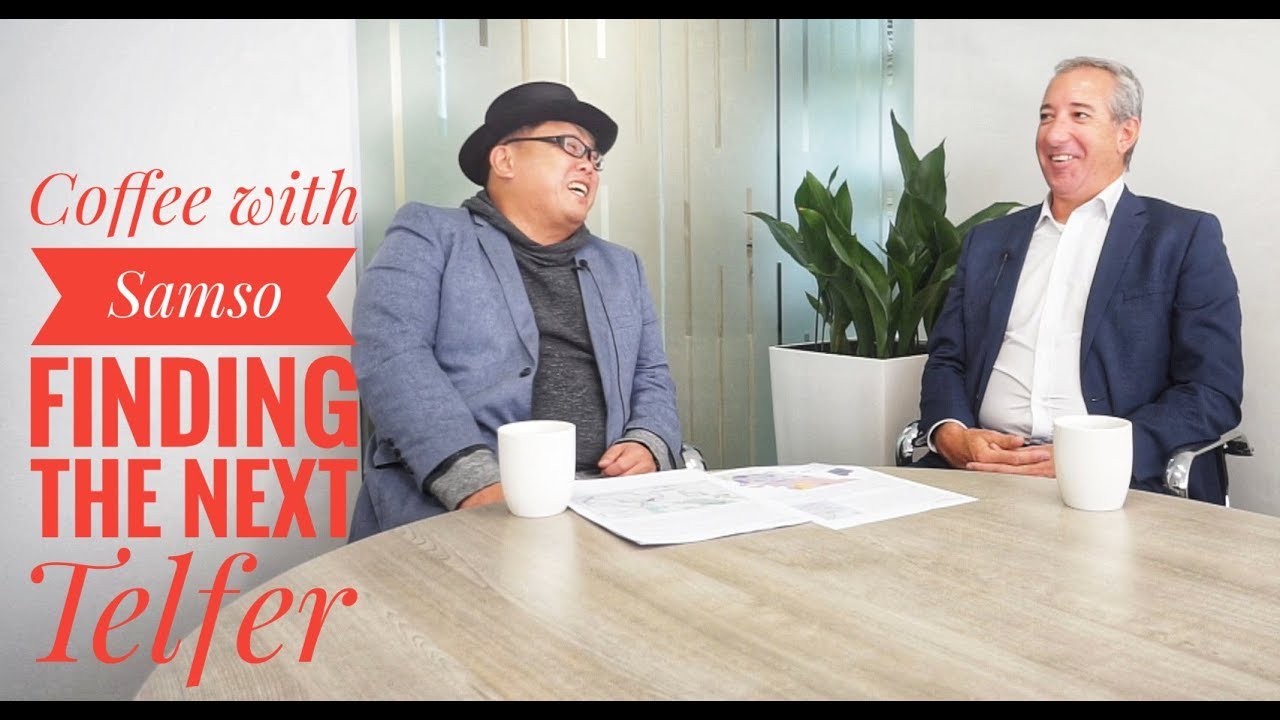
- Finding the next Telfer
Coffee with Samso Episode 8 with Ed Mead, Executive Director, Artemis Resources Limited (ASX:ARV) The latest episode of Coffee with Samso brings Samso to talk with Ed Mead. Ed Mead is the Executive Director of Artemis Resources Limited (ASX: ARV). This conversation is about the company’s recent acquisition of the South Telfer Gold and Copper project. The discussion focused on several topics such as, South Telfer Project Paterson Range The historical drilling results for the project The fact that infrastructure is not an issue for exploring in the Paterson Range. Exploration is all about a systematic process. The conversation was fun and brought out some myth busters about the Paterson Range. This is a shorter version of the conversation. This segment is the introduction to the South Telfer project and why Ed feels it has interesting merits. PODCAST Disclaimer The information or opinions provided herein do not constitute investment advice, an offer or solicitation to subscribe for, purchase or sell the investment product(s) mentioned herein. It does not take into consideration, nor have any regard to your specific investment objectives, financial situation, risk profile, tax position and particular, or unique needs and constraints. Read full Disclaimer. www.samso.com.au If you find this article informative and useful, please help me share the information. I try and write about topics that are interesting and have the potential to be of investment value. It is not easy to find stories that fit those parameters. If you or your organisation see the benefit of what Samso is trying to achieve and have a need to share your journey, please contact me on noel.ong@samso.com.au. About Samso
- The Business of Uranium
Coffee with Samso Episode 10 with Mike Young In this episode of Coffee with Samso, I was delighted to have a conversation with Mike Young about the Uranium business. I believe that this is going to be the future of clean and efficient energy. Unfortunately, this is such a topical subject that the mention of the word “uranium” strikes abundant negative connotations to the general public. Two major disasters in this nuclear sector have created a universal fear of the most efficient and cleanest energy source. There is no argument that there is risk involved in having nuclear energy. However, there are risks involved in everything. There are countless disasters that have left a long term footprint on this planet that is not related to nuclear. However, that has not stopped continued activity within those sectors. With the increasing momentum in the renewable energy sector, one should look at nuclear energy to reduce our energy costs. In this conversation, Mike Young gives Samso a great insight into what is little know about the uranium industry and what is happening around the world. PODCAST Disclaimer The information or opinions provided herein do not constitute investment advice, an offer or solicitation to subscribe for, purchase or sell the investment product(s) mentioned herein. It does not take into consideration, nor have any regard to your specific investment objectives, financial situation, risk profile, tax position and particular, or unique needs and constraints. Read full Disclaimer. www.samso.com.au If you find this article informative and useful, please help me share the information. I try and write about topics that are interesting and have the potential to be of investment value. It is not easy to find stories that fit those parameters. If you or your organisation see the benefit of what Samso is trying to achieve and have a need to share your journey, please contact me on noel.ong@samso.com.au. About Samso
- A Genetic Consideration for Miners
Coffee with Samso Episode 33 with Chris Davis, Diesel Nanoparticulates This episode is off our beaten track and a bit more scientific, but I believe it highlights an issue of great importance - the profound effects of diesel exhaust emissions on workers in the mining industry. I’m talking here to Chris Davis, a veteran of the industry and the champion of this issue in the West Australian mining community. Chris reveals the disturbing fact that miniscule nanoparticles in diesel exhaust can alter human genetic structure, meaning that future generations could suffer the effects of these emissions. Diesel exhaust emissions, already declared a Class 1 Carcinogen by the World Health Organisation, consist of gaseous components like CO, NOx, Sox and HC, as well as diesel particulate matter (DPM) made up of carbon soot chains from the combustion process covered with solid metals, hydrocarbons, aldehydes and other chemicals. The problem is that nano diesel particulate matter (nDPM) is so small – less than a hundredth of the width of a human hair – it’s easily ingested and the body has no natural defence. It passes directly from the lungs to the bloodstream to appear anywhere in the body and can even pass from the nose through nerves to the brain. The World Health Organisation’s DPM Carcinogen classification mainly concerned lung cancer, but other clinical studies have indicated further health effects such as bladder cancer, DNA damage and impaired blood vessel function. Highlights of my conversation with Chris include: Everyone’s talking about COVID-19 transmission, but nDMP is much finer and lungs weren’t designed to handle diesel particles A study at a West Australian mine showed that after just one shift miners ingesting these chemicals had higher blood pressure and lower respiratory function More worryingly, the study showed some DNA gene functions had been altered nDPM filters are available and have already been introduced on buses in Europe Watch the interview here or see the video above. PODCAST Disclaimer The information or opinions provided herein do not constitute investment advice, an offer or solicitation to subscribe for, purchase or sell the investment product(s) mentioned herein. It does not take into consideration, nor have any regard to your specific investment objectives, financial situation, risk profile, tax position and particular, or unique needs and constraints. Read full Disclaimer. www.samso.com.au If you find this article informative and useful, please help me share the information. I try and write about topics that are interesting and have the potential to be of investment value. It is not easy to find stories that fit those parameters. If you or your organisation see the benefit of what Samso is trying to achieve and have a need to share your journey, please contact me on noel.ong@samso.com.au. About Samso
- Getting to Know Samso
Mining HQ Podcasts Ep. 1 - 00:41 Samso debuts this podcast with Mining HQ by introducing what Samso does. Noel also reveals his favourite stocks: GAL – Good exploration project, nickel. RIE – Good project in the US. High grade gold in Arizona. HCH – Big copper play in Chile. BSX – A more producer style company in nickel, downstream and in Vietnam. CYM – Copper play in Australia. Looking to produce copper in 2022. Tune in to : Also don't miss out on: Or go to 00:41 - https://open.spotify.com/episode/4FMI7L5HFosFEvZ5o5vjEE Radio Interviews with Mining HQ reaching out to 100,000 audiences per broadcast Noel Ong of Samso and Chris LeMesurier of 1055 TripleM speak fortnightly on Mining HQ about Mineral Exploration, Commodities and Mineral Resources. For the investors: Our interviews with Mining HQ includes topics to help you make good investment decisions. We also share Stock Picks, Stocks to Watch and Weekly Summaries. For Samso's clients: This is an additional opportunity for you to engage with investors directly. Samso works with a number of Media Partners like MiningHQ and Brilliant-Online to widen your reach. Contact Samso
- VMS System - Confirmed
Rooster Talk Episode 33 with Andrew Radonjic, Managing Director - Venture Minerals Limited (ASX: VMS) The latest announcement on the Golden Grove north project. The first time I looked at Venture Minerals, I was immediately drawn upon the Golden Grove North deposit. The first Coffee with Samso - A Targeted Diversified Mineral Explorer - Venture Minerals Limited (ASX: VMS) was published on 26th October 2020. Today, Andrew Radonjic shares with us, the significance of the assays, what does it mean in terms of the exploration strategy. confirmation of a VMS system and the potential for further discoveries in the area. the relationship between the geophysical and geochemical exploration techniques. the next steps in the exploration path forward, and why the company is excited and why shareholders should be excited as well. This is a good time to download the first Ebook (FREE) from Samso as it is all about VMS (Volcanogenic Massive Sulfides). PODCAST About Andrew Radonjic Mr Radonjic is a geologist and mineral economist with over 25 years of experience in mining and exploration, with a specific focus on gold and nickel in the Eastern Goldfields of Western Australia. Mr Radonjic began his career at the Agnew Nickel Mine before spending over 15 years in the Paddington, Mount Pleasant and Lady Bountiful Extended operations north of Kalgoorlie. He has fulfilled a variety of senior roles which gave rise to three gold discoveries, totalling in excess of 3 million ounces in resources and the development of over 1 million ounces. About Venture Minerals Limited Venture Minerals Limited is currently exploring in Western Australia for Copper-Lead-Zinc at the Thor Prospect, Nickel-Cobalt at the Pingaring Project (adjacent and along strike to the Quicksilver Nickel-Cobalt discovery), Nickel-Copper (new target) at the Odin Prospect and Nickel-Copper-Cobalt at the Caesar Project. Recently the maiden drilling program at Thor intersected massive sulfides confirming the Copper-Lead-Zinc target is a 20 a kilometre VMS style system. Thor is now a top priority target for Venture moving forward. The Company's initial focus was on realising the full economic potential of the Mount Lindsay Tin-Tungsten Deposit in North-West Tasmania. The Company has already defined one of the world's largest undeveloped tin deposits and has completed a Feasibility Study on Mount Lindsay. The emergence of tin as the metal most impacted by new technology through its use in Electric Vehicles has refocused Venture’s approach to developing this asset and an underground scoping study is currently underway. Disclaimer The information or opinions provided herein do not constitute investment advice, an offer or solicitation to subscribe for, purchase or sell the investment product(s) mentioned herein. It does not take into consideration, nor have any regard to your specific investment objectives, financial situation, risk profile, tax position and particular, or unique needs and constraints. Read full Disclaimer. Share to Grow: Your Bonus Samso has just released an eBook: How to Add Value to your Share Portfolio A lesson on geological models sought by mining companies that gives insight and an understanding of which portfolios are better - and potentially more lucrative – investments. Click here to download this eBook. About Rooster Talk Rooster Talks are conversations with industry experts about market insights, trends and learnings that benefit businesses across all sectors in the Australian Stock Exchange. If you find this Rooster Talk informative and useful, please help me share the information. I try and write about topics that are interesting and have the potential to be of investment value. It is not easy to find stories that fit those parameters. If you or your organisation see the benefit of what Samso is trying to achieve and have a need to share your journey, please contact me on noel.ong@samso.com.au. About Samso